Texas beekeeping is less about romantic meadows and more about July heat, sudden storms, and reading city code before you screw a bottom board down.
I almost put my first hive under a beautiful oak with no thought about where foragers crossed my neighbor’s driveway.
Site selection checklist
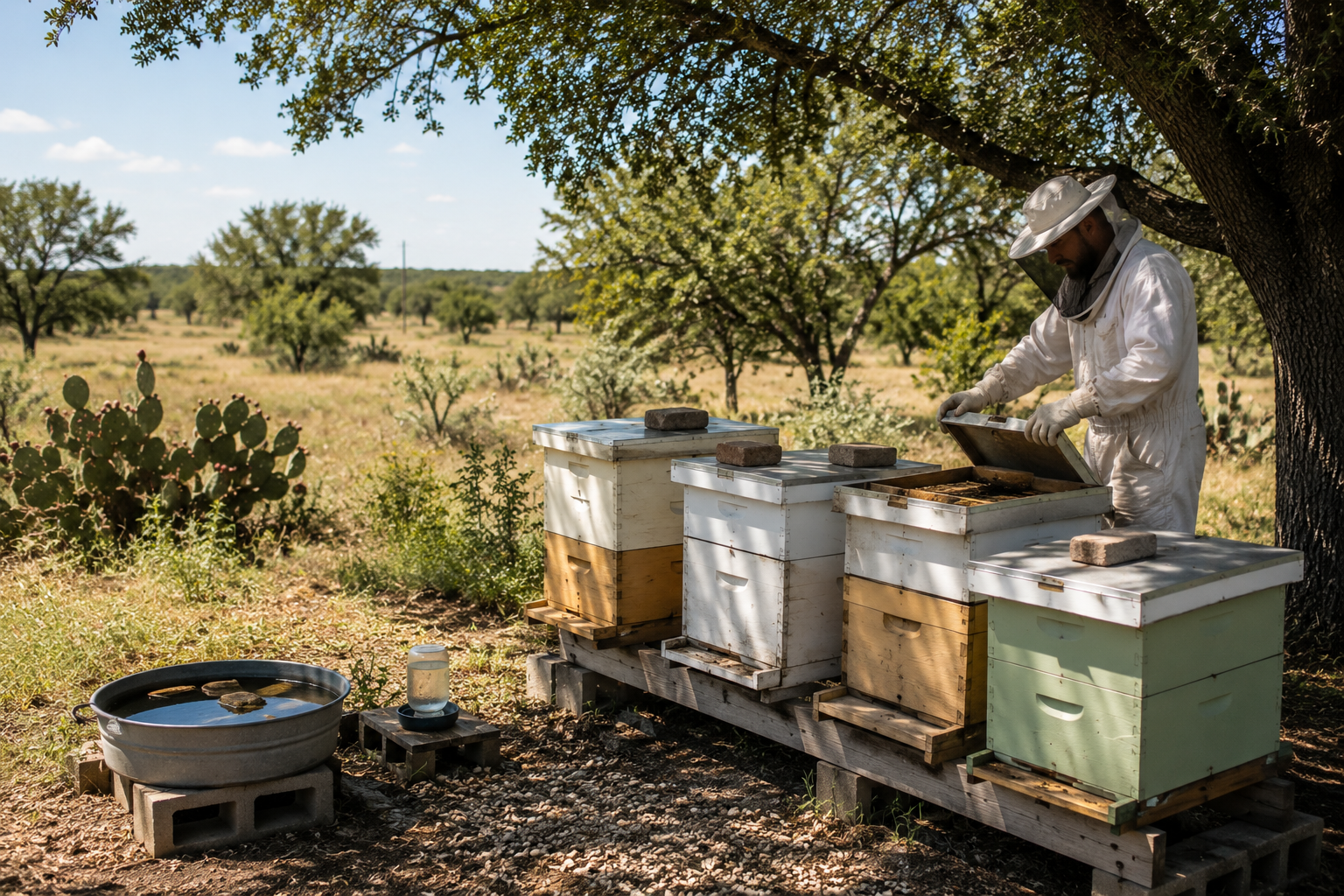
- Afternoon shade or light-colored wrap strategy
- Hive entrance facing a fence/hedge so flight rises above walkways
- Water with landing pebbles on your property only
- Stand level and skunk-resistant (elevated pallet or stand)
- 10+ feet from property lines where local code specifies setbacks — verify your city PDF
Heat management (the real Texas boss)
Over 100°F days happen in many regions. Tactics:
- Ventilated inner cover or screened bottom (pick a system, learn it)
- Shade cloth during heat waves — not permanent deep shade all day
- Windbreak for storms
- Monitor nectar dearth — summer robbing risk rises
Law: state vs city vs HOA
Texas Agriculture Code covers basics like movable frames and equipment identification when hives are off your home apiary address. TAIS handles inspections, registrations for certain activities, and interstate movement rules — read current TAIS pages for your case instead of trusting random blogs that say “always register” or “never register.”
Your city may add hive caps, water requirements, or flyway barriers. HOAs can ban bees entirely.
Call the city clerk. Search “[city] beekeeping ordinance.”
Gear and bees timing
- Nuc or package timing should match local nectar — ask club mentors
- Full veil every inspection in heat — dehydration hits you first
- Smoker, hive tool, feeder, mite treatment plan bought before install day
First-season calendar (simplified)
| Month | Tasks |
|---|---|
| Mar–Apr | Install bees; weekly brood checks; feed if light |
| May–Jun | Add supers when brood box 70–80% full; mite baseline |
| Jul–Aug | Dearth robbing watch; water; shade |
| Sep–Oct | Mite treatment window per local club; winter weight |
| Nov–Feb | Heft hives; emergency feed if light; plan spring splits |
Mistakes I see in Texas year one
- Ignoring varroa because bees look busy in April
- Placing hives on soggy ground that rots bottom boards
- Promising neighbors honey before proving gentle genetics
Club value
County associations run heat splits demos and requeening workshops — irreplaceable for Texas-specific timing.
Texas beekeeping works for beginners when site, law, and heat are planned before the bees arrive — not discovered during a 104°F inspection meltdown.