Experienced beekeepers share free hive plans — PDFs, club handouts, forum threads. I saved money on my second box and lost a weekend on my first because the rabbet depth was wrong by three millimeters. The frames floated. The bees built comb where they pleased.
Free plans work when they match real Langstroth standards and your chosen frame size.
Pick 8-frame or 10-frame first — then stay consistent
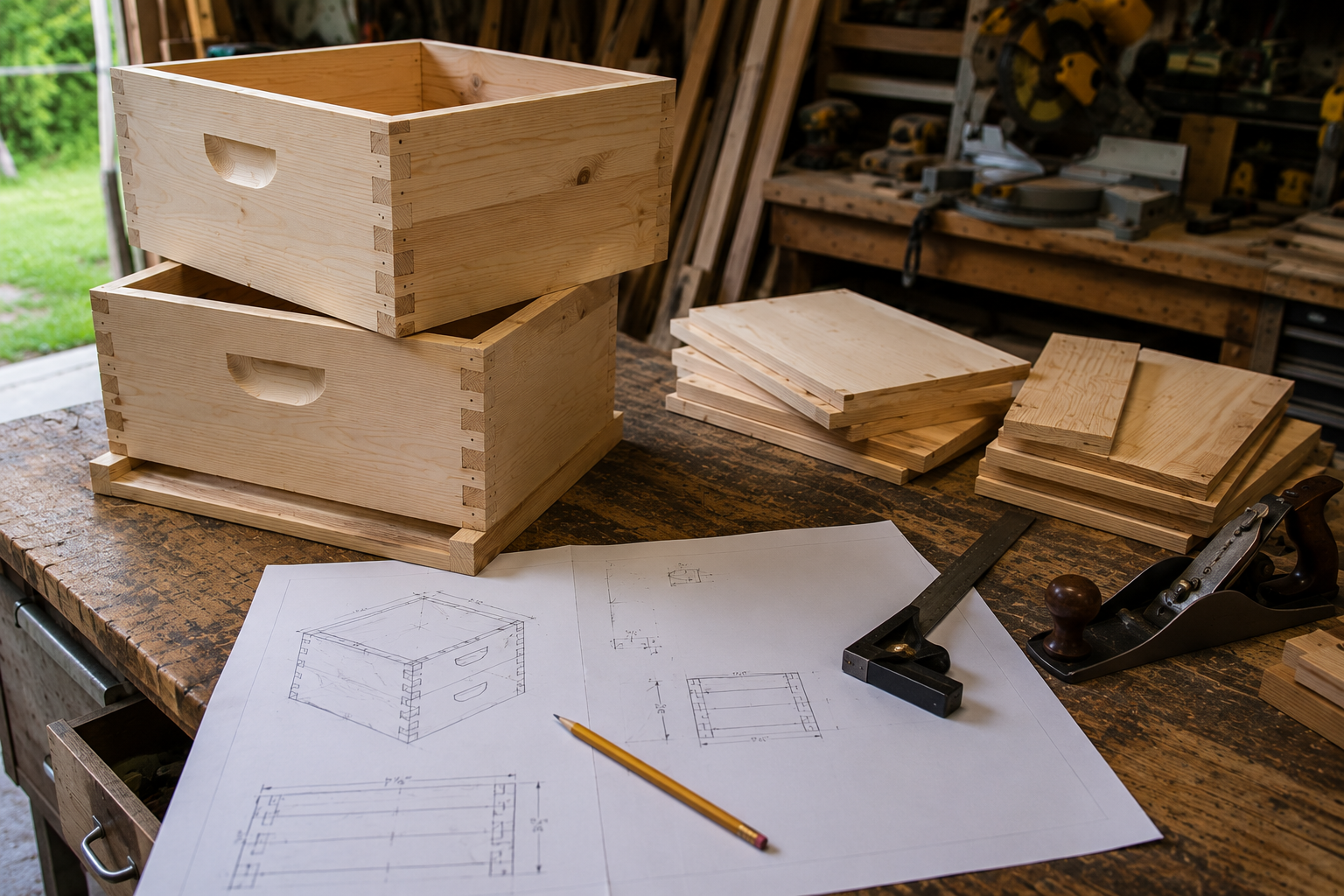
Langstroth gear is interchangeable only inside the same frame count and box dimensions. A 10-frame deep is roughly 19-7/8 inches long, 16-1/4 inches wide, and 9-5/8 inches tall (commercial kits vary slightly — match your frame supplier).
Before cutting:
- Download plans that specify frame rest rabbet depth (often about 5/8 inch) and hand-hold space
- Buy frames from the same vendor you will use for years — build boxes to those frames, not the reverse
Cut list mindset (one deep + cover set)
For a minimal starter you are usually building:
- One deep brood box (or two if your climate needs a double brood)
- Bottom board with entrance notch
- Inner cover (not optional in most climates — ventilation and feeding space)
- Outer cover with overhang for rain
- Optional medium super later — do not build three supers before you have drawn brood comb
Plywood sheet layouts in good plans tell you how many box sides per 4×8 sheet. Pine boards are easier to rabbet but heavier.
Assembly order that prevents rework
- Dry-fit frames inside the box before glue or screws finalize
- Square the box — diagonal measurements equal
- Pre-drill screw holes in end grain to prevent splits
- Paint or seal exterior only; leave interior bare for bee propolis
- Level the stand before bees arrive, not after the hive is full
Ventilation and bee space details beginners skip
- Entrance reducer slot for a new package
- Screened bottom board vs solid — pick one system and learn it
- Queen excluder is optional year one; many mentors skip it initially
- Frame wiring or foundation choice affects bee acceptance — plans rarely mention this
When free plans are worse than a kit
If bees arrive in nine days, buy a commercial box and build in the off-season. Warped garage pine in humid climates gaps within a season.
Club review before bees move in
Bring the box to a meeting. Mentors catch short boxes, wrong hand-holds, and lids that do not shed rain in one walk-around.
Tools you actually need for DIY
- Table saw or circular saw with guide
- Drill, square, measuring tape
- Rabbet bit or table saw dado for frame rests
- Smoker and veil for install day — woodwork skill does not replace PPE
Bottom line
Free hive plans are a smart way to learn carpentry and save cash once you treat them like precision plans, not Pinterest decor. Measure against real frames, build one perfect deep, and put bees in wood that accepts standard equipment — that is where the value is.