The first time I used a seedling heat mat, I treated it like a cozy blanket I could leave on until transplant day. Within a week, my tomato starts went leggy, and two trays developed that sad, pinched look at the soil line — classic damping-off. A grower at our local swap finally said the line I still repeat: warm soil speeds germination, warm soil after sprouting invites trouble.
If you are starting seeds indoors in late spring or early summer, a heat mat can shave days off germination. Used wrong, it can make fungal problems more likely. Here is what I changed after that conversation and a pass through the usual extension guidance on damping-off and seed-starting heat.
Put the mat under the tray — never in the mix
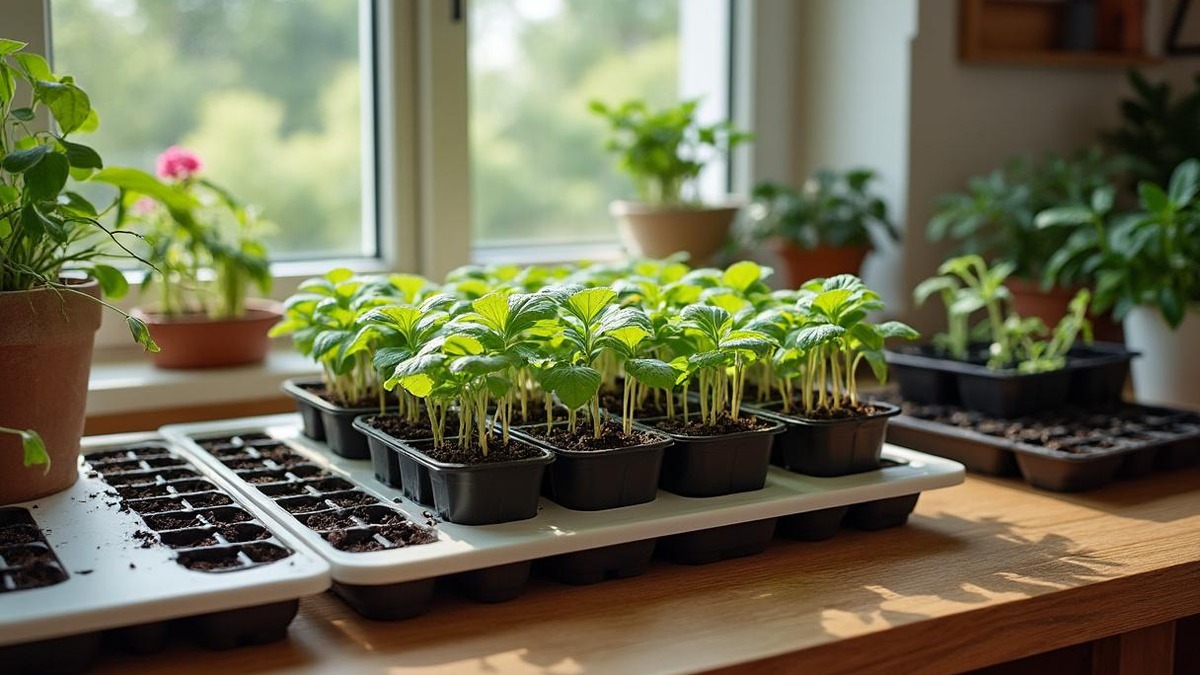
Place a seedling heat mat under the flat or tray, with the container sitting directly on the mat so heat moves into the root zone from below. Do not bury a mat inside the potting mix, and do not use a household heating pad — seed mats are waterproof and meant for gentle, even bottom heat.
Honest mistake on my part: I once slid a mat halfway under only half the tray because of space on the shelf. The side that missed the mat germinated two days slower, which looked like “bad seed” until I noticed the temperature split.
Aim for soil temperature, not guesswork at the air
Room temperature on the label of your thermostat lies. Soil in a plastic cell on a basement bench can run several degrees colder than the room, especially near exterior walls or AC vents.
For most vegetables and herbs started indoors, target about 70–80°F (21–27°C) in the mix while you are waiting for sprouts — not the 68–72°F band alone, which is often too cool for tomatoes, peppers, and basil. Many university extension programs suggest about 70–75°F under trays for indoor production, and note that cool, wet soil slows growth and favors damping-off. Peppers and eggplant usually appreciate the warmer end of the range; lettuce and other cool-season crops often germinate fine without a mat at all.
A thermostat with a soil probe is worth the small extra cost. It keeps the mat from overheating on warm afternoons and is safer than stacking towels on top of the mat to “tone down” heat — covering mats traps heat and is a fire risk.
The step that prevents rot: remove the mat when you see green
This is the non-negotiable rule I ignored.
Unplug or remove trays from the heat mat as soon as seedlings emerge — or when roughly half the tray has sprouted, if you sow unevenly. Seedlings want cooler air after emergence (often roughly 60–70°F) and bright light. Leaving them on bottom heat pushes soft, stretched growth and makes damping-off more likely when the surface stays warm and wet.
Damping-off is a fungal problem in cool, wet, low-airflow conditions — not “heat alone.” The mat becomes risky when it pairs with saturated mix, domes left sealed too long, or overhead watering that keeps the stem wet. Sterile seed-starting mix, clean trays, good drainage, and airflow matter more than trying to brute-force dryness with heat.
Moisture: warm does not mean soggy
Heat mats do not replace careful watering. Bottom-watering from a shallow reservoir lets mix wick moisture without soaking the stem line. I use a light, well-draining seed-starting mix with perlite or vermiculite and check weight daily — if the tray feels heavy and the surface looks shiny, I skip water even if the mat is still on during germination only.
Warm soil can dry the surface faster, which is why mats sometimes tempt people to overwater. I watch for that cycle: dry surface → heavy pour → fungus. A small fan on low after emergence helps more than another degree of heat.
If you are starting seeds in late May or June
Timing depends on your climate. In many US regions, June indoor starts are late for long-season crops but still useful for succession plantings, herbs, or heat-loving crops you want ready for a July bed. In air-conditioned rooms, soil can still run cool enough to stall germination without a mat — but you may not need one at all if your room already holds 70°F+ day and night.
Match the tool to the crop: use the mat for heat-lovers that are lagging; skip it for lettuce and other cool germinators that prefer cooler soil.
Quick checklist I keep on the shelf
- Mat under the tray; full contact; UL-listed seed mat only
- Thermostat + probe; most veggies 70–80°F in mix while germinating
- Sterile mix, clean trays, drain holes, bottom water
- Off the mat at first green; move to light; gentle airflow
- Do not confuse slow germination with bad luck — check soil temp first
A heat mat is a germination tool, not a nursery crutch. Once I stopped using it as always-on warmth and started pairing it with sterile mix and an exit plan at emergence, sprouting got faster without those collapsing stems at the soil line — which is the outcome most of us actually mean when we say we want speed without “root rot.”