My nephew wanted to pet bees after a cartoon. Real bees are not pets — but kids can learn observation skills that last longer than any single hive visit.
This is a practical guide for families near managed hives, without pretending your city built a magic safe petting zone.
Ground rules adults enforce
- No running or swatting near hives
- Closed shoes always in the bee yard
- One calm adult at the hive; kids at a marked line (10–15 feet back minimum for beginners)
- Talk to your pediatrician about allergy risk if family history exists; keep an emergency plan plain
- No sweet snacks open by the hive
What to teach by age
Ages four to seven — Bees collect nectar and pollen; they defend their home. Watch from distance; draw what you see in a notebook.
Ages eight to twelve — Pollen vs nectar; why bees fan at the entrance. Help with a water station away from the flight path. Learn when inspections happen and why suits matter.
Teens — Assisted veil use after training, mite discussion, optional record-keeping (weather, flowers blooming, hive noise).
School programs vs home hives
Observation hives behind glass with a beekeeper present are not the same as opening your top bar with a birthday party in the yard. Home hives need fence lines and neighbor communication.
Jobs kids can actually help with
- Filling pebble water trays
- Painting hive stands (latex exterior, dry fully)
- Labeling honey jars with adult supervision
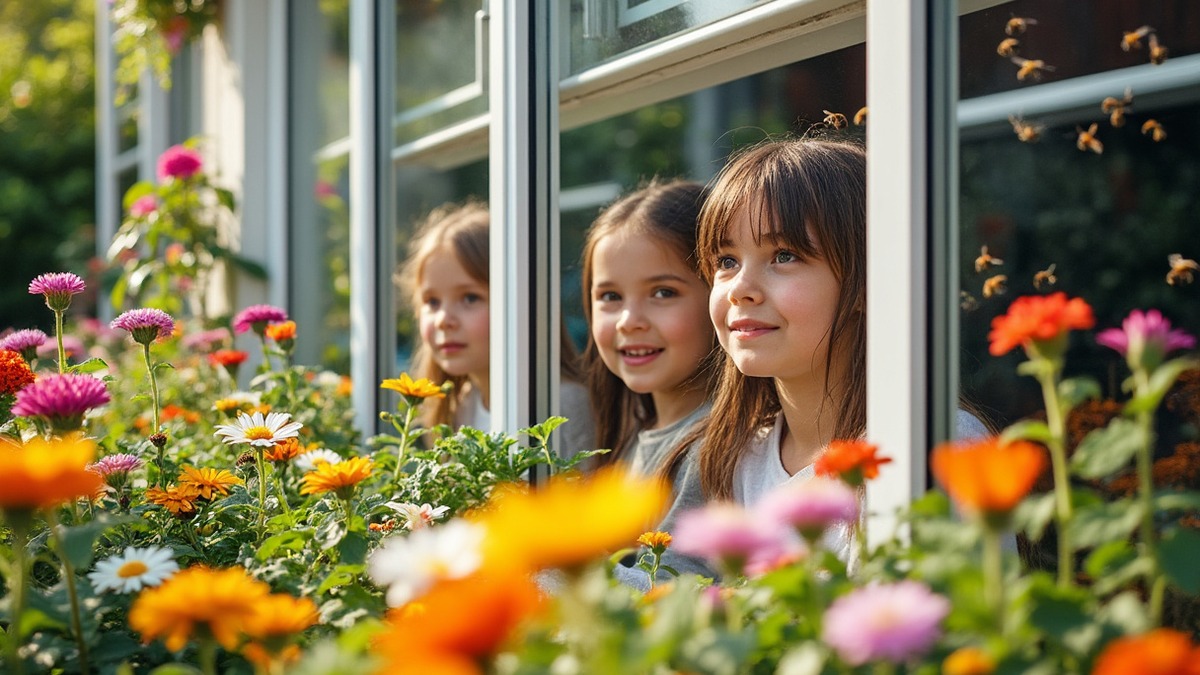
- Garden planting for bee forage — high engagement, lower sting risk
Neighbor kids
If children visit next door, your responsibility includes flight path height, water on your property, and swarm prevention. A chat over the fence prevents 911 calls later.
Kids and bees coexist when adults treat bees as managed livestock with rules — not cartoon sidekicks. Curiosity plus distance beats cuddle zones every time.