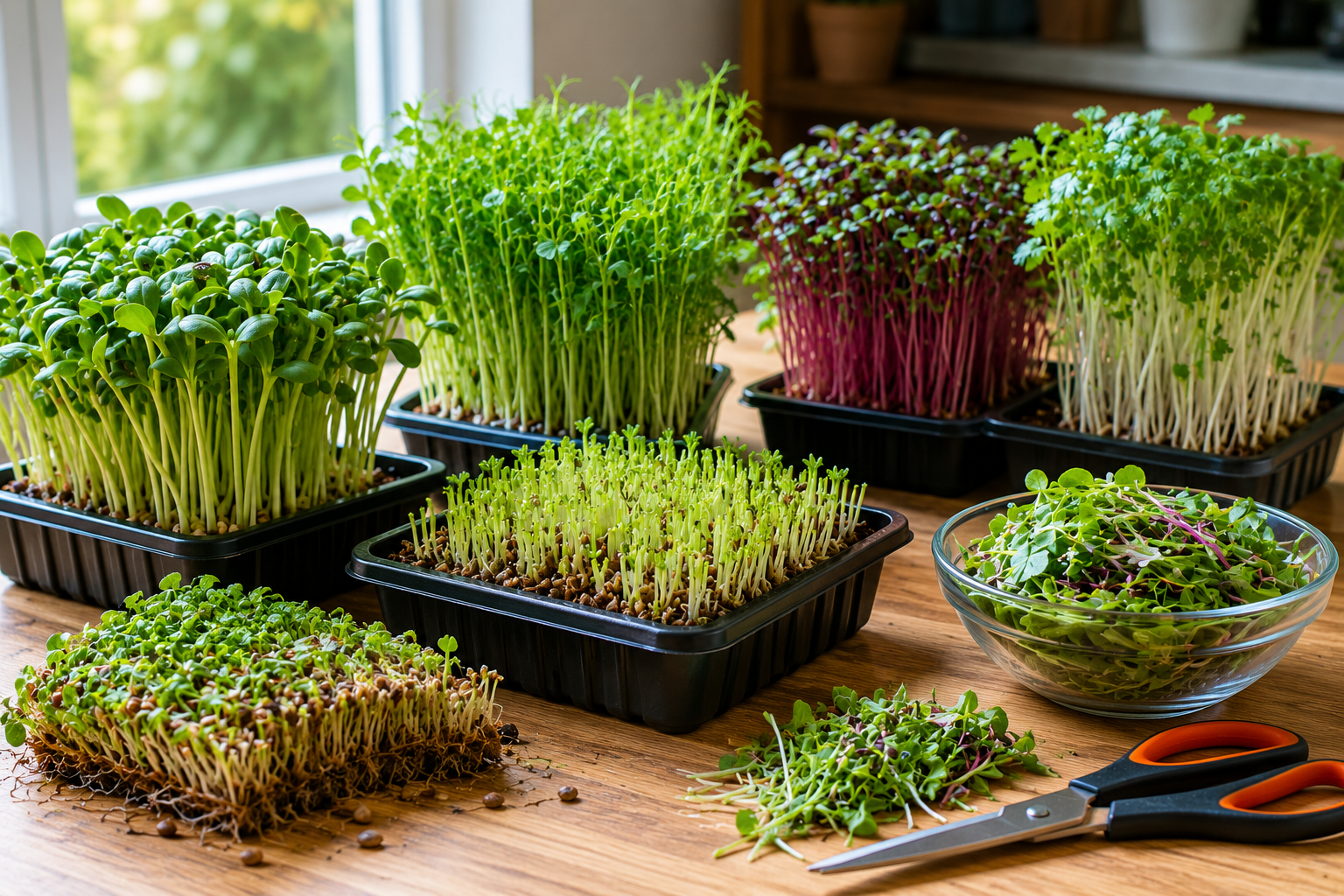
The first time I tried to get a second harvest from a tray of broccoli microgreens, I left half an inch of stem and waited like it was lawn grass. A few pale shoots appeared, then the tray went moldy. That was my clue: microgreens are usually a one-cut crop, not cut-and-come-again salad greens.
If you searched do microgreens regrow after cutting, here is the short answer, then what actually works by crop.
The short answer
Most microgreens do not regrow in a useful way after you harvest them. You are cutting the plant at the stage where it has used much of the seed’s stored energy to push cotyledons (and sometimes the first true leaves). Without enough leaf area and growing tips left, the tray cannot rebuild a full second crop.
What people call a “second flush” is sometimes a few weak side shoots — not a second tray worth selling or eating.
Why regrowing usually fails
Microgreens are sown dense on purpose. After the first cut, stems are crowded, wet, and prone to rot. The main growing point for many varieties is removed when you cut low.
Unlike mature head lettuce in the garden, there is little plant left to photosynthesize and no deep root system — just a mat of roots in a thin layer of mix.
A common mistake is treating a harvested tray like a houseplant you can “revive” with water. Extra moisture on cut stubs often invites mold and damping-off, not a comeback.
When you might see a little new growth
Some growers get a partial second crop only if they:
- Cut high above the lowest node (more plant tissue left)
- Use crops that branch from the stem (peas, some sunflowers)
- Accept lower quality — pale, thin, uneven shoots
Even then, yield is a fraction of the first harvest and flavor is often flat.
By crop: what to expect
| Crop | Regrow after cut? | Notes |
|---|---|---|
| Radish, broccoli, kale, cabbage | No (practical) | Cut low = no meaningful second flush |
| Pea shoots | Sometimes weak second | Cut above lowest node; many pros resow instead |
| Sunflower | Rare weak regrowth | Often better to start a fresh tray |
| Basil, cilantro (as micro herbs) | Limited | May sprout side shoots if you leave true leaves; not reliable |
| Wheatgrass / barley grass | Poor second cut | Usually one harvest per sowing |
| Beet, amaranth | No | Taproot energy spent on first growth |
If your variety is not listed, assume one harvest until you have tested that exact seed lot and cut height twice.
The paper-towel “regrow” trick
You may see videos showing harvested greens on a damp paper towel in the fridge “coming back.” That is hydration and turgor, not regrowth — wilted leaves perk up for a day or two. It does not replace a new sowing in soil or coco coir.
For food safety, I do not store cut microgreens on damp towels at room temperature; use them fresh or compost the tray and resow.
What works better than waiting for round two
Resow a new tray. For most home growers, a fresh 10×20 tray on a heat mat (if needed) and under light delivers a full crop in roughly 7–14 days — faster and cleaner than nursing a spent mat for a thin second flush.
My routine after harvest:
- Compost or clean the old mat if roots are dense and spent
- Sterilize or rotate trays if mold was an issue
- Sow the next batch while the first tray is on the scissors — staggered planting beats regrow experiments
If you want continuous harvest without gambling on regrowth, run two or three trays on a staggered schedule instead of one tray you cut twice.
If you still want to experiment
Cut higher on pea or sunflower trials only. Keep airflow on the tray, water lightly at the edges (not over the cut stubs), and throw the tray out at the first sign of gray mold.
Do not expect grocery-store density on flush two. Photograph yield so you see whether your time is worth it — mine was not.
Bottom line
Do microgreens regrow after cutting? For most varieties, no — not in a way worth relying on. Plan for one clean harvest per sowing, then start a new tray. That is how you match the search intent behind this question without wasting a week on pale stubs and mold.
Pea shoots are the main exception worth a careful test; everything else, in my kitchen, earns a fresh scoop of seed instead of a second chance on the same mat.