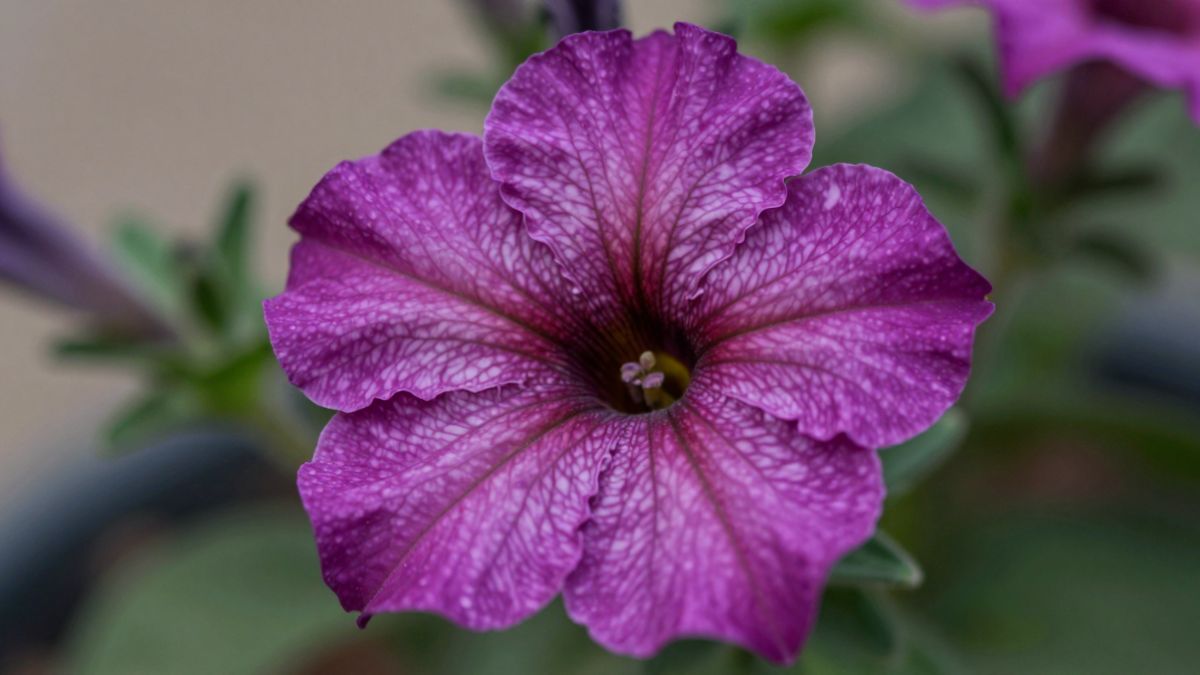
You know that sinking feeling when you walk past your neighbor’s balcony and see their petunias exploding with color—while yours are just… green sticks with a few sad flowers? You watered them. You fertilized. You even talked to them (no judgment). But they’re still putting on a pitiful show.
Here’s what no one tells you at the garden center: the problem isn’t what you’re doing. It’s what you’re not doing. And it takes exactly 10 seconds per plant.
The one move that changes everything
Professional growers call it “pinching,” and it’s the closest thing gardening has to a cheat code. When your petunia is young—about 4-6 inches tall—you literally pinch off the top growing tip with your fingers. That’s it.
Sounds brutal, right? Like you’re sabotaging your own plant. But here’s what happens next: instead of growing one tall, leggy stem with flowers only at the top, your petunia panics (in a good way) and sends out multiple branches. More branches = more flower buds = the kind of explosion you’ve been scrolling past on Instagram.

Why your petunias are betraying you right now
Let’s be honest about what’s happening in your pots:
- Leggy stems reaching for the sky like they’re trying to escape
- Flowers clustered at the very top, leaving the bottom half naked and awkward
- Weak, floppy growth that bends over after one rainstorm
This isn’t your fault. Petunias are genetically programmed to grow upward toward light. In nature, that’s smart. In your container? It looks like a disaster.
The pinching protocol (do this today)
For young plants (4-6 inches): Use your thumb and forefinger to snap off the top 1-2 inches of the main stem, just above a set of leaves. Don’t overthink the angle. Just pinch.
For established plants that are already leggy: Cut back stems by one-third using clean scissors. Yes, you’ll lose some flowers temporarily. But within 2 weeks, you’ll have a bushier, more vigorous plant that actually resembles the pictures on the seed packet.
Repeat pinching every 2-3 weeks until mid-summer. Each time you pinch, you’re telling the plant: “Stop reaching. Start branching.”

The 2026 timing advantage
Here’s why this matters right now as we head into the 2026 growing season: climate patterns are shifting earlier. Spring warmth is arriving 10-14 days sooner in many regions, which means your petunia planting window is different than it was five years ago.
If you’re planning your garden for late March/early April 2026, you need to start pinching in early May—not late May like the old guides suggest. The earlier you establish that bushy structure, the longer your blooming season extends into fall.
What happens if you skip this
We’ve all seen those sad hanging baskets by August: straggly stems dangling down with a few flowers clinging to the ends like they’re holding on for dear life. That’s the fate of un-pinched petunias.
The math is simple: One stem = 10-15 flowers max. Five stems from pinching = 50-75 flowers. Would you rather have a plant or a spectacle?

The bottom line
Pinching feels wrong the first time you do it. Your brain will scream, “I’m destroying my plant!” Push through that feeling. In 10 days, you’ll see new shoots emerging from where you pinched. In 3 weeks, you’ll have a completely different plant—fuller, healthier, and already setting twice as many buds.
Your neighbor’s petunias aren’t magic. They just got pinched at the right time. Now you know the secret too.