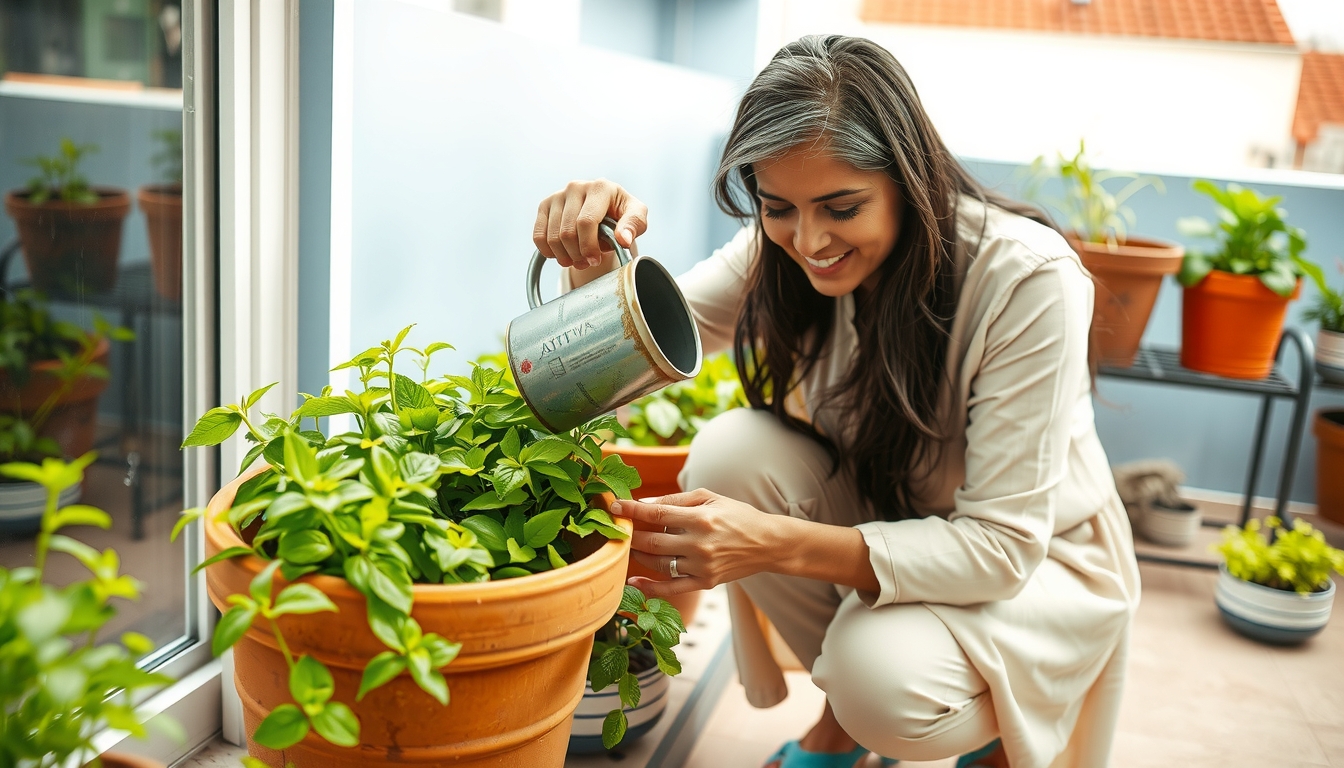
That lush mint plant you bought three weeks ago is now a sad collection of brown stems. You watered it regularly. You gave it sunlight. Yet here you are, wondering what went wrong.
The answer is simpler than you think: you’re watering mint like it’s a cactus or drowning it like a water lily. Mint needs a Goldilocks approach—not too much, not too little, but just right. And that “just right” changes based on where you’re growing it.
Let’s fix this.
The Mint Watering Rule Nobody Tells You
Mint wants consistently moist soil, never waterlogged, never bone dry.
Here’s the test: stick your finger 2 cm into the soil. If it feels dry, water. If it feels damp, wait.
Do this every morning during summer. Every other day during monsoon. Every 2-3 days in winter.
Container mint dries faster than ground mint. A terrace pot in May will need water twice daily. The same pot in January might need it once every three days.

The Three Deadly Watering Mistakes
Mistake 1: Watering on a schedule
You read “water every day” somewhere and followed it religiously. But your balcony gets different sun, different wind, different temperatures than the article writer’s setup.
Soil moisture matters, not calendar days.
Mistake 2: Shallow sprinkling
You splash a cup of water on top and call it done. The top 1 cm gets wet. The roots 10 cm down stay dry. The plant wilts despite daily watering.
When you water, water until it drains from the bottom. This ensures the entire root ball gets moisture.
Mistake 3: Evening watering in humid climates
You water at 7 PM because it’s convenient. The soil stays wet overnight. Fungus moves in. Roots rot. Leaves turn yellow, then brown.
Water mint in the morning. The plant uses moisture during the day. Excess evaporates. Roots stay healthy.
The Container vs Ground Reality
Container mint (pots, grow bags, balcony planters):
– Dries out fast
– Needs drainage holes (mandatory)
– Water when top 2 cm is dry
– Summer: once or twice daily
– Winter: every 2-3 days
– Use saucers but empty them after 30 minutes
Ground-planted mint (garden beds, terrace beds):
– Retains moisture longer
– Needs well-draining soil mixed with compost
– Water when top 3 cm is dry
– Summer: daily or every other day
– Winter: twice weekly
– Mulch around plants to hold moisture

The Weather-Based Watering Chart
Hot summer (35°C+, dry):
Containers: twice daily (early morning, late afternoon)
Ground: once daily (morning)
Monsoon (heavy rain, high humidity):
Containers: check daily, water only if dry
Ground: skip unless 3+ days without rain
Winter (below 20°C):
Containers: every 2-3 days
Ground: twice weekly
Cloudy/overcast days:
Reduce frequency by 30-40%
How to Tell If You’ve Already Messed Up
Overwatered mint:
– Yellow leaves (starting from bottom)
– Soft, mushy stems
– Soil smells sour or rotten
– Leaves drop when touched
– Black spots on stems
Fix: Stop watering immediately. Check drainage holes—are they blocked? Remove plant from pot. Trim black/brown roots. Repot in fresh, well-draining mix. Water only when top 3 cm is dry.
Underwatered mint:
– Crispy brown leaf edges
– Wilting despite moist-looking soil (roots are dead)
– Leaves curl inward
– Stems turn woody
– Soil pulls away from pot edges
Fix: Water thoroughly until it drains. Place pot in a tray of water for 30 minutes (bottom watering). Remove and drain. Resume regular watering schedule. Trim dead stems.

The Right Pot Makes All the Difference
Mint in a terracotta pot dries faster than plastic. You’ll water more often, but overwatering is harder.
Mint in plastic or ceramic holds moisture longer. Perfect for forgetful gardeners, risky for enthusiastic waterers.
Pot size matters: 20-30 cm diameter minimum. Small pots dry out in hours during summer.
Drainage holes are non-negotiable. No holes = dead mint within weeks.
The Finger Test (Your New Best Friend)
Forget moisture meters. Your finger is more reliable.
Every morning:
1. Stick your index finger 2 cm into the soil
2. Dry? Water deeply
3. Damp? Skip it
4. Wet? Check drainage and reduce watering
Do this for two weeks. You’ll learn your mint’s exact rhythm.

Quick Troubleshooting Path
If leaves are yellowing:
→ Check soil moisture
→ Too wet? Stop watering, improve drainage
→ Just right but still yellow? Check for pests underneath leaves
If leaves are browning/crisping:
→ Check soil moisture
→ Too dry? Water immediately and increase frequency
→ Moist but still browning? Check for root rot (smell the soil)
If plant is wilting:
→ Water immediately
→ Still wilting after 2 hours? Root damage likely—check roots
→ Roots brown/black? Trim and repot
The Indian Climate Factor
Delhi summer vs Mumbai monsoon vs Bangalore winter—mint watering changes dramatically.
Hot, dry climates: Water more, mulch heavily, consider shade cloth during peak summer
Humid, rainy climates: Water less, ensure excellent drainage, avoid evening watering
Moderate climates: Follow the finger test, adjust seasonally
Your neighbor’s watering schedule won’t work for you. Your mint, your microclimate, your schedule.

The Bottom Line
Mint isn’t hard to grow. It’s hard to grow when you follow generic advice instead of watching your actual plant.
Check soil moisture daily. Water when needed, not when scheduled. Ensure drainage. Water in the morning.
Do these four things, and your mint will stop dying and start thriving.