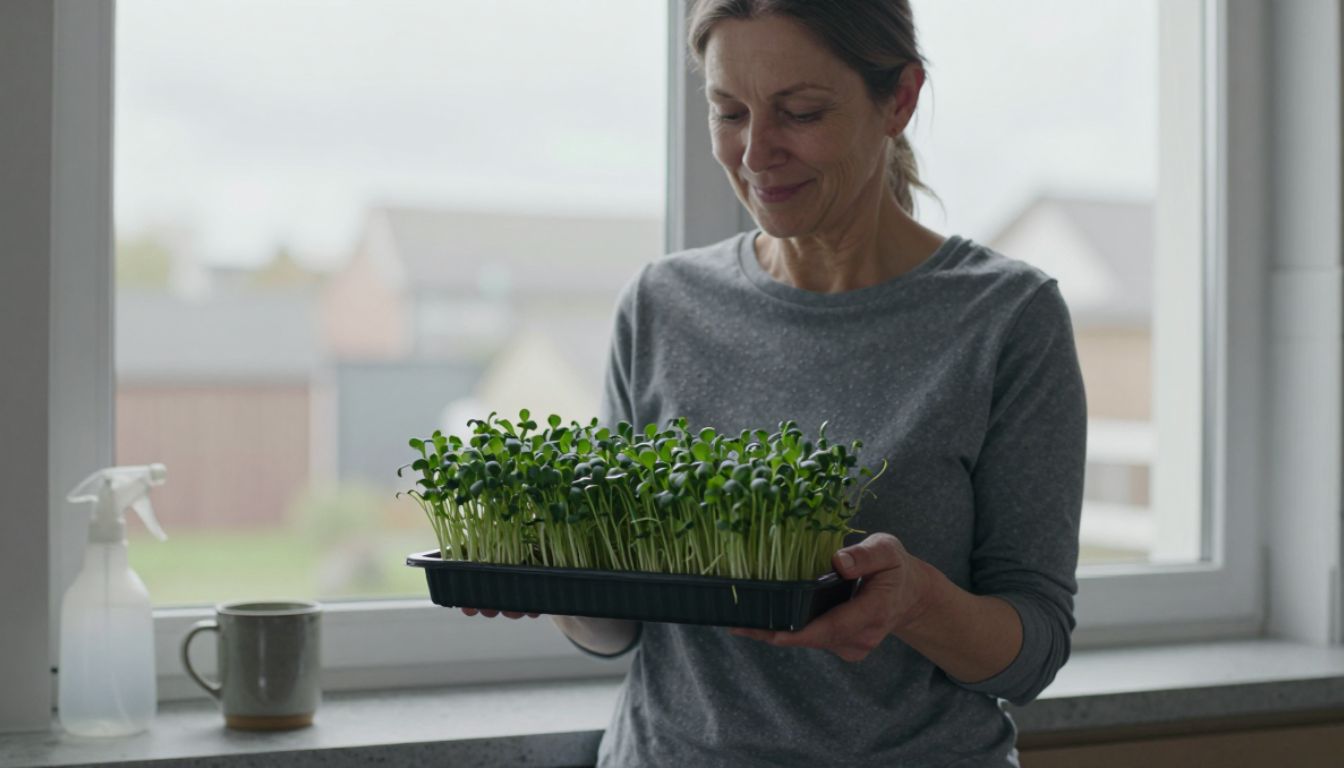
A north-facing window sounds like the worst spot for plants—yet it’s often the easiest place to grow chia microgreens cleanly. The light is gentler, the temperature is steadier, and the tray stays in the ‘sweet spot’ longer without the drama of scorching sun or wild swings in moisture.
If you’ve ever tried growing microgreens on a south-facing sill and watched them wilt, dry out, or turn leggy in a single afternoon, you know the frustration. We’ve been told that plants need maximum sunlight. But chia microgreens don’t want a sunbath—they want consistent, bright indirect light and stable warmth. And that’s exactly what a north-facing window delivers.
The myth: You need direct sun
The gardening advice we grew up with says more sun equals more growth. That works for tomatoes and peppers. But microgreens are harvested in less than a week, and they’re grown in shallow trays with minimal soil or none at all. They dry out fast. They overheat easily. And they don’t have deep roots to buffer temperature swings.
Direct sun through glass can push tray temperatures into the high 80s°F (30°C+) in winter, even when your room feels cool. That kind of heat accelerates evaporation, stresses seedlings, and creates uneven growth—tall and pale in the middle, stunted and dark at the edges.
A north-facing window in the Northern Hemisphere receives no direct sun. Instead, it gets steady, diffused daylight all day long. The light is softer, the temperature is more stable, and the moisture in your tray doesn’t vanish between morning and lunch.
What chia microgreens actually need
Chia seeds are tiny, mucilaginous, and fast-growing. They don’t need soil—many growers use a damp paper towel, a hydroponic mat, or a thin layer of coconut coir. They germinate in 24 hours and are ready to harvest in 5 to 7 days.
Here’s what they do need:
- Bright indirect light: enough to fuel photosynthesis, but not so intense that it dries the tray or scorches tender leaves.
- Steady warmth: ideally 65–75°F (18–24°C). Avoid cold drafts and hot vents.
- Controlled moisture: the growing medium should stay damp but not waterlogged. Chia seeds form a gel layer when wet, so they’re forgiving—but they can mold if sitting in stagnant water.
A north-facing window checks all three boxes without requiring constant vigilance.
Placement guide: Distance, drafts, and vents
Not all north-facing windows are equal. Here’s how to optimize your setup:
Distance from glass: Place your tray 12 to 18 inches (30–45 cm) back from the windowpane. This keeps the tray in bright ambient light while avoiding the cold zone right against the glass in winter.
Avoid cold drafts: If your window is drafty or single-pane, move the tray a bit farther back or use a thin curtain to buffer the cold. Chia seeds germinate best above 60°F (15°C). Below that, growth slows and mold risk rises.
Avoid heater vents: Don’t place your tray directly above a radiator or forced-air vent. The dry heat will require constant misting and create uneven growth.
Use a reflective surface: A white tray, a sheet of aluminum foil, or a white towel under the tray can bounce light upward and improve uniformity. This is especially helpful if your window is small or partly shaded by an overhang.

6-day routine tailored for low-intensity light
Growing chia microgreens on a north-facing windowsill is straightforward, but timing matters. Here’s a day-by-day guide:
Day 0 (seeding): Spread 1–2 tablespoons of chia seeds evenly over a damp growing mat or paper towel in a shallow tray. Mist lightly. Cover with a second tray or a piece of cardboard to block light and retain moisture.
Day 1–2 (germination in the dark): Keep the tray covered. Mist once daily if the surface looks dry. Seeds will sprout pale, thread-like roots and push up tiny white stems.
Day 3 (uncover): When stems are about half an inch tall and starting to lift the cover, remove it and place the tray on your north-facing windowsill. The seedlings will be pale yellow—that’s normal. They’ll green up fast once exposed to light.
Day 4–5 (greening): Mist once or twice daily, depending on humidity. The cotyledons (first leaves) will unfurl and turn bright green. Growth will be steady but not explosive—that’s the benefit of cooler, gentler light.
Day 6–7 (harvest): When the leaves are 1.5 to 2 inches tall (4–5 cm) and vibrant green, snip them just above the mat with scissors. Rinse and enjoy. They’ll taste mild, slightly nutty, and crunchy.
If growth is slow: 3 tweaks
Sometimes a north-facing window in winter—especially in northern latitudes—can be dim. If your chia microgreens are taking 9 or 10 days instead of 6, or if they’re staying pale, try these adjustments:
Move the tray closer to the window: Reduce the distance to 6–8 inches (15–20 cm) from the glass, but monitor for cold drafts.
Extend daily light exposure: If your window gets only 6 hours of good daylight in January, consider supplementing with a small LED grow light for 2–3 hours in the evening. Even a desk lamp with a daylight bulb (5000–6500K) can help.
Add a reflective backdrop: Place a piece of white poster board or foil behind the tray (between the tray and the room) to reflect more light onto the greens.
These tweaks are rarely necessary unless you’re growing in a basement window or during a stretch of heavy overcast weather.

Why north beats south for beginners
South-facing windows are brighter, but they’re also more variable. In winter, low-angle sun can blast your tray for hours, then disappear behind clouds or buildings. In summer, the heat can be punishing.
North-facing windows are predictable. The light doesn’t spike. The temperature doesn’t swing. You can water in the morning and trust the tray will still be damp at dinner.
That consistency is especially valuable if you’re new to microgreens or if you’re growing them in a busy household. You don’t need to hover. You don’t need to move the tray three times a day. You just mist, wait, and harvest.
Other microgreens that thrive in north light
Chia isn’t the only crop that loves a north-facing windowsill. These varieties also perform well in bright indirect light:
- Arugula: peppery, fast-growing, ready in 7–10 days.
- Mustard greens: spicy, colorful, vigorous even in low light.
- Lettuce: mild, tender, forgiving of cooler temps.
- Broccoli: slightly longer (10–12 days), but reliable and nutrient-dense.
Avoid sun-hungry crops like basil, sunflower, or pea shoots on a north window—they’ll stretch and pale without stronger light.

Pick the calmest window, not the brightest beam
Growing chia microgreens isn’t about maximizing lumens. It’s about creating a stable environment where tiny seedlings can grow evenly, green up cleanly, and reach harvest without stress.
A north-facing window gives you that stability. The light is soft but sufficient. The temperature is steady. The moisture lasts. And you get to enjoy fresh, crunchy greens in less than a week—without the guesswork, the wilting, or the midday panic.
If you’ve been avoiding indoor gardening because you thought you needed a greenhouse or a grow light setup, start here. One tray. One north-facing windowsill. One week. You’ll be surprised how easy it is when you stop chasing the sun and let the calm light do the work.