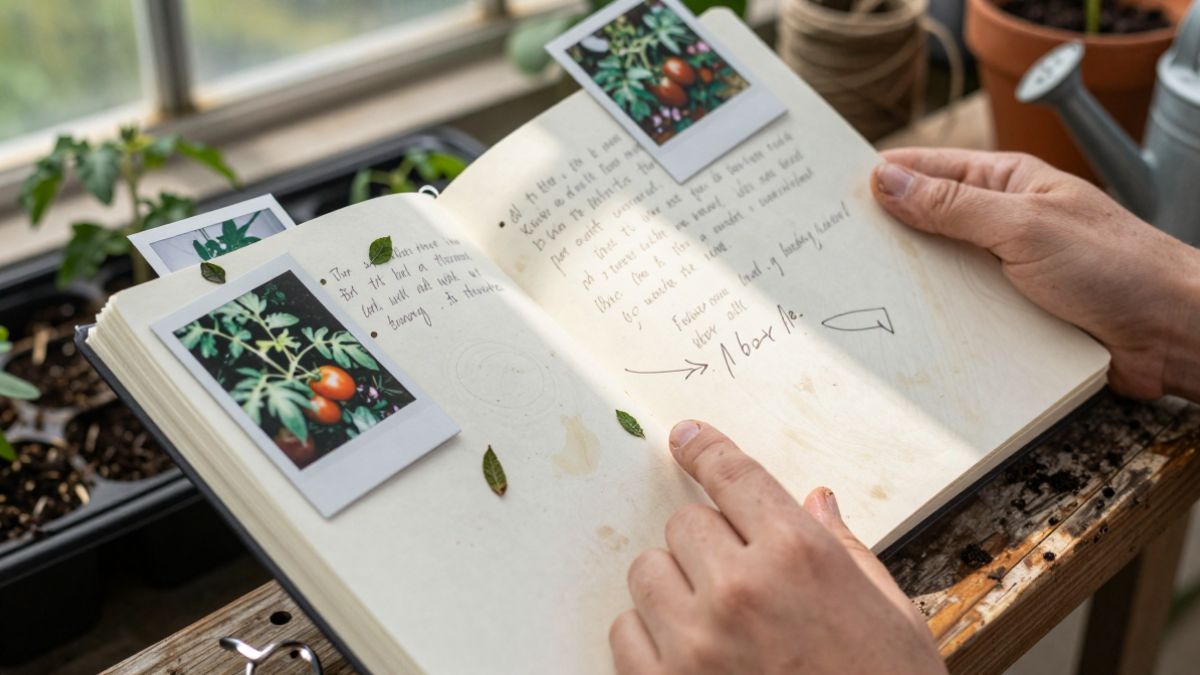
Most gardeners spend years repeating the same mistakes without realizing it. The difference between struggling and thriving isn’t more fertilizer or better soil—it’s memory. A simple gardening diary transforms guesswork into pattern recognition, and suddenly those mysterious brown spots or wilting leaves start making perfect sense.
You don’t need a fancy system. Just four data points, captured weekly, will unlock insights that expensive apps and YouTube rabbit holes never could. Here’s how to build a tracking habit that actually works.
The four things worth recording (and nothing else)
Overthinking kills journaling faster than aphids kill roses. Focus only on what changes your plants’ behavior:
- Weather snapshot: High/low temps, rainfall, humidity spikes. Weather drives almost everything else.
- Watering events: When you watered and how much. This alone solves 60% of houseplant drama.
- Feeding schedule: What you fed, when, and to which plants. Overfeeding is invisible until it isn’t.
- Visible changes: New growth, discoloration, pests, flowering. The “what happened this week” section.
That’s it. No Latin names required. No essay-length observations. If you can text, you can keep a gardening diary.

Why photos beat paragraphs every time
A single weekly photo is worth a thousand adjectives. Your memory will insist that yellowing started “recently”—your camera roll will show it began six weeks ago, right after you switched fertilizers.
Take the same angle each week. Stand in the same spot, same lighting if possible. For houseplants, use your phone’s portrait mode to blur the background clutter. For garden beds, shoot from waist height looking down.
The magic happens when you scroll back through months of images. Patterns emerge that your brain filtered out in real time: fungus always appears after three days of high humidity, spider mites show up within a week of temperatures hitting 85°F, tomatoes double in size the week after fish emulsion.
The one-page weekly log that takes 3 minutes
Forget the leather-bound journals. A single-page template, printed or digital, keeps you consistent.
Weekly entry format:
- Date range: [Monday–Sunday]
- Weather: High __, Low __, Rain __, Notes __
- Watered: [List plants/beds]
- Fed: [What you used, where]
- Observed: [Bullet points only—”Basil flowering,” “Monstera new leaf,” “Aphids on roses”]
Digital option: Use your phone’s Notes app with a recurring weekly reminder. Create a template, duplicate it each Sunday, fill in blanks while sipping coffee.
Printable option: Keep a clipboard in the shed or kitchen. One sheet per week, hole-punch and store in a binder. At season’s end, you’ll have a complete reference guide for next year.

How to spot patterns before disaster strikes
After 4–6 weeks, your diary becomes predictive. Here’s what to look for:
- Fungus follows humidity: If your log shows leaf spots appearing 2–3 days after humidity spikes above 70%, you’ll know to increase airflow before the next rainy spell.
- Pests follow heat stress: Spider mites and aphids often attack within a week of temperatures jumping 10+ degrees. Your diary will show you the trigger point.
- Overwatering patterns: If wilting happens despite regular watering, scroll back. You’ll likely find soil stayed wet for 5+ days before symptoms appeared.
- Fertilizer timing: Compare growth spurts to feeding dates. Most gardeners discover they’re feeding 2x too often or at the wrong time of season.
The real power is year-over-year comparison. Next December, you’ll know exactly when you started seeds, when the first frost hit, which varieties failed. No more “I think it was early March?”
Printable and digital options that actually work
For the analog crew: Download a free weekly log template (search “garden journal printable”). Pro tip: Use a waterproof notebook or laminate your template sheet and use dry-erase markers for quick outdoor updates.
For the digital natives:
- Google Sheets: Create columns for Date, Weather, Watering, Feeding, Observations. Color-code cells (green = good week, yellow = watch closely, red = problem).
- Garden apps: Planta, Gardenize, or From Seed to Spoon all offer diary features. But honestly? A simple phone note beats a complicated app you’ll abandon in three weeks.
- Voice notes: Too muddy to write? Record a 30-second voice memo while standing in the garden. Transcribe later.
Example entries that prove it works
Vegetable garden (July 15–21):
- Weather: Highs 88–92°F, no rain, humidity 65%
- Watered: Tomatoes + peppers (deep soak Mon/Thu), lettuce daily
- Fed: Nothing (last feeding 7/8)
- Observed: Tomatoes setting fruit like crazy. Zucchini showing powdery mildew on lower leaves (started airflow fan). Beans need trellising ASAP.
Houseplants (Jan 3–9):
- Weather: Indoor 68–72°F, dry (heater running)
- Watered: Pothos, Snake Plant, Monstera (all Sat)
- Fed: Diluted fish emulsion to Monstera only
- Observed: Pothos pushing 3 new leaves. Fiddle Leaf Fig dropped 2 lower leaves (moved away from vent—too dry?). Peace Lily drama queen as usual.
Notice the tone? Casual, honest, barely edited. This isn’t a scientific paper—it’s a conversation with your future self.
Start this weekend (seriously)
Grab whatever you have—a spiral notebook, a sticky note, a voice memo—and record this week’s snapshot. Weather, watering, changes. Three minutes. That’s your first entry.
By next month, you’ll be catching problems a week before they become catastrophes. By next season, you’ll be the gardening friend everyone asks for advice. The best growers aren’t the ones with the greenest thumbs—they’re the ones who remember what worked.
Your plants are already telling you everything. A diary just helps you listen.