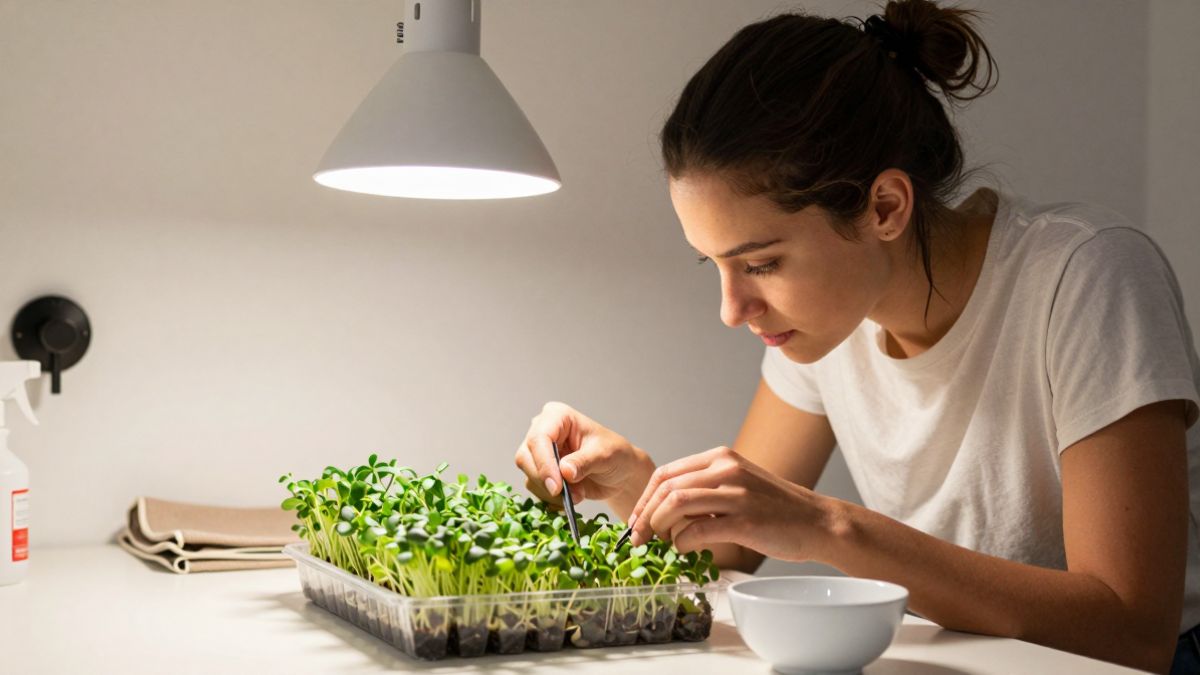
You spray the trays, mist the seeds, close the lid, and wake up to white fuzz creeping across your microgreens like silent invaders. It’s not your fault—monsoon humidity in India turns every kitchen into a tropical greenhouse, and mold spores love it as much as your radish seeds do.
Between June and September, indoor relative humidity in Indian metros routinely crosses 75–85%, and that changes everything for microgreens growers. What worked beautifully in February now invites disaster. But with a handful of targeted tweaks—airflow, watering discipline, and tray hygiene—you can keep your trays clean and your greens thriving, even when the rain drums on your window for weeks.
Why monsoon humidity changes everything
Microgreens need moisture to germinate and grow. Mold needs moisture, warmth, and still air—exactly what monsoon kitchens provide.
During the dry months, evaporation happens fast. You can mist twice a day, and the surface dries between waterings. But in monsoon, water sits. It pools in corners, clings to lids, and keeps the growing medium perpetually damp. That stagnant moisture is an open invitation for Pythium, Fusarium, and other fungal hitchhikers.
The good news? Mold prevention isn’t about eliminating moisture—it’s about managing airflow and surface dryness.

Airflow checklist: fan, spacing, lids
Still air is mold’s best friend. Your first line of defense is movement.
Position a small table fan 1.5–2 meters away from your trays, angled so air sweeps gently across the surface. You don’t want a gale—just enough breeze to keep the top layer from staying wet for hours. Run it for 20–30 minutes after each watering, and again mid-morning if your kitchen feels stuffy.
Space your trays. Don’t stack them or push them flush against a wall. Leave at least 5–8 cm between trays so air can circulate on all sides.
Rethink your lids. Blackout domes are essential for germination, but once seeds sprout (usually day 2–3), crack the lid slightly or remove it entirely during the day. If you’re growing indoors without natural light, prop the lid with a clothespin or small wedge to create a 1–2 cm gap. Full封闭 lids trap humidity and turn trays into petri dishes.
Bottom-watering and drying the surface
Top-misting is convenient, but in monsoon it’s risky. Water droplets sit on leaves and soil, and evaporation slows to a crawl.
Switch to bottom-watering. Place your growing tray (with drainage holes) inside a larger tray filled with 1–2 cm of clean water. Let the medium wick moisture upward for 10–15 minutes, then remove the water tray. This keeps the surface dry while roots stay hydrated.
If you must mist from the top—because your medium is coco coir or you’re in the blackout phase—do it early in the morning (6–7 a.m.) so the surface has maximum daylight hours to dry. Never mist after sunset during monsoon.
Between waterings, let the top 0.5 cm of the medium dry out visibly. It should feel barely damp to the touch, not wet or spongy.

Sanitizing trays safely
Mold spores survive on plastic, wood, and fabric. If you reuse trays without cleaning them properly, you’re seeding the next batch with contamination.
After each harvest, wash trays with hot soapy water, scrubbing corners and drainage holes with a brush. Rinse thoroughly.
Then sanitize: mix 1 part white vinegar with 3 parts water, or use a hydrogen peroxide solution (3% concentration, undiluted). Spray or soak trays for 5 minutes, rinse, and air-dry completely in sunlight if possible. UV light is a natural disinfectant.
Don’t skip this step during monsoon. Even a trace of old organic matter can kickstart mold growth in humid conditions.
Best monsoon-friendly seeds
Some microgreens are naturally more mold-resistant because they germinate fast, grow upright, and don’t hold water on their leaves.
Top picks for monsoon:
- Radish (all varieties): Germinates in 24–36 hours, grows tall and airy, minimal leaf contact with soil.
- Mustard (sarson): Fast, vigorous, tolerates slight neglect.
- Fenugreek (methi): Traditional favorite, hardy, and familiar to Indian kitchens.
- Sunflower (unhulled): Larger seeds, less prone to clumping, excellent airflow between stems.
- Pea shoots: Thick stems, minimal surface moisture retention.
Seeds to avoid or grow cautiously:
- Basil: Slow germination, loves humidity—mold loves it too.
- Chia and flax: Mucilaginous seeds that create a gel layer; very mold-prone in monsoon.
- Broccoli and kale: Not impossible, but require extra vigilance with airflow and watering.

What to do if you spot fuzz: decision tree
You lift the lid and see white or grayish fuzz. Don’t panic—act fast.
Step 1: Identify the scope.
- A few isolated spots (less than 5% of tray)? Proceed to Step 2.
- Widespread fuzz across 20%+ of the tray? Discard the entire batch. Don’t try to salvage it—mold releases spores, and harvesting will spread contamination to your kitchen and future trays.
Step 2: Remove affected areas carefully.
Use tweezers or a spoon to lift out moldy clusters, roots and all. Place them directly into a sealed plastic bag—don’t shake or blow on them. Dispose outside your home.
Step 3: Increase airflow immediately.
Move the tray to a brighter, airier spot. Run a fan continuously for the next 24 hours. Reduce watering frequency by half.
Step 4: Spray hydrogen peroxide (optional, use with caution).
Mix 1 part 3% hydrogen peroxide with 4 parts water in a spray bottle. Lightly mist the remaining greens from 20–25 cm away. This can slow mold spread, but it may also stress young seedlings. Use only if the tray is more than 5 days old.
Step 5: Harvest early if needed.
If the remaining greens look healthy but you’re worried about recurrence, harvest them a day or two earlier than planned. Rinse thoroughly in cool water, spin dry, and use immediately.
Keep your routine, adjust your tactics
Growing microgreens at home during monsoon isn’t harder—it just requires precision. The seeds still want to grow. The nutrients are still there. You’re simply managing one extra variable: moisture that refuses to leave.
Start your next batch with sanitized trays, choose radish or mustard, water from the bottom, and let that fan hum softly in the background. When October arrives and the air dries out, you’ll realize how much you learned.
And when your neighbors ask how you kept your greens so clean through the rains, you’ll have a six-step answer ready.