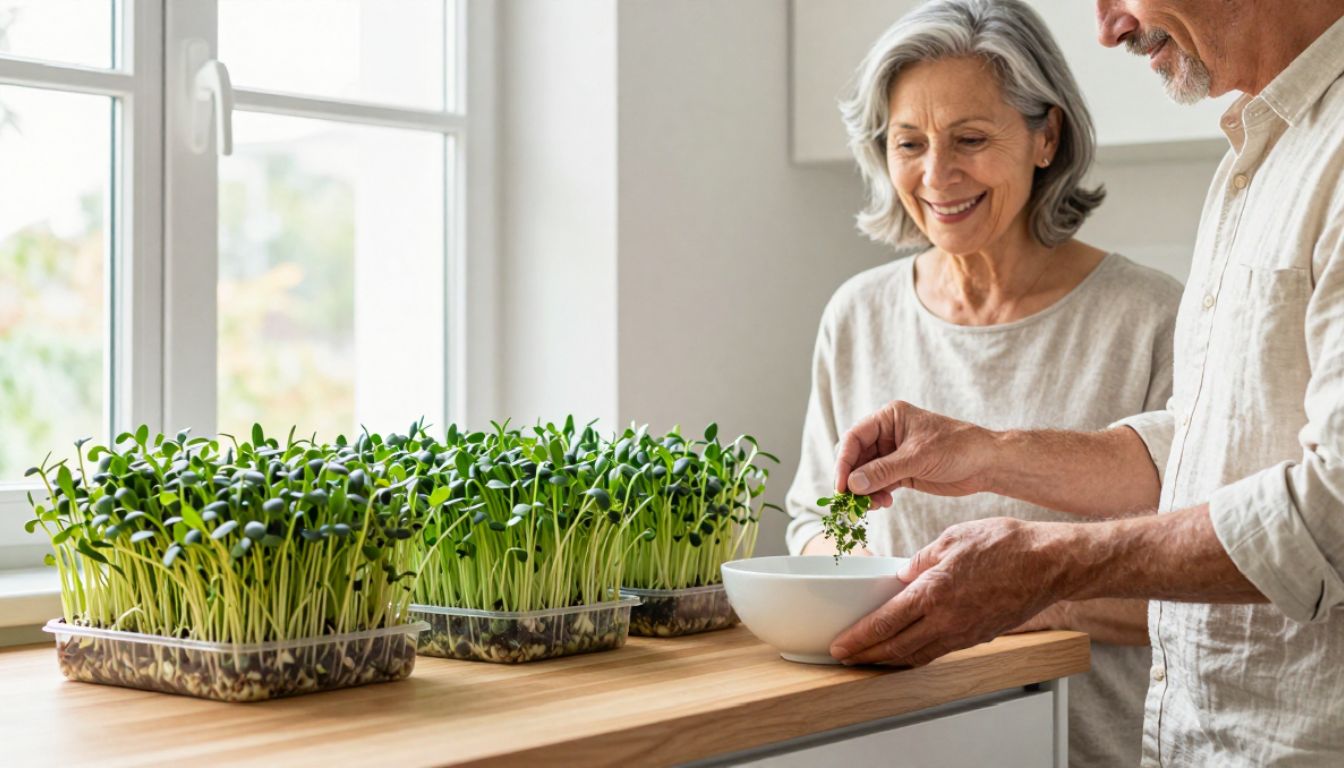
A windowsill “mini farm” isn’t about one perfect tray—it’s about rhythm. Start one Chia tray every Sunday, and by Friday you’ll have a full strip of green and a harvest you can count on, week after week.
Most people treat microgreens like a hobby project: buy seeds, get excited, harvest once, then forget about it. But the real magic happens when you turn it into a weekly routine. One tray. One day. Five days later, you’re snipping fresh greens over your lunch. No guesswork, no overwhelm, just a predictable system that fits on a windowsill.
The Sunday setup: 10 minutes, same spot every time
Every Sunday, I grab the same shallow container—a 5×7-inch plastic takeout tray works perfectly—and line it with two layers of damp paper towels. No soil, no mess. Chia seeds are mucilaginous, meaning they form a gel when wet, so they cling to the towels and don’t need dirt to sprout.
I sprinkle about one tablespoon of chia seeds evenly across the surface. Not clumped, not sparse. Then I mist them lightly with a spray bottle and cover the tray with an inverted lid or a second tray to block light. This creates a humid, dark environment that kickstarts germination.
The tray goes on the same spot on my windowsill every single week. Same light. Same temperature. Same muscle memory. By the time I’m done, it’s been less than ten minutes, and I don’t think about it again until Wednesday.

Wednesday check-in: uncover and let them see light
By Wednesday morning, those seeds have sprouted into a pale tangle of stems reaching upward. This is the moment they need light. I remove the cover, give them a gentle mist, and let them sit in indirect sunlight.
If your windowsill gets harsh afternoon sun, shift the tray a few inches back or use a sheer curtain to diffuse it. Chia microgreens are forgiving, but they don’t love being scorched. The goal is bright, indirect light for the next two days.
I mist them once more on Thursday morning—just enough to keep the paper towels damp, not soaked. Overwatering invites mold. Underwatering leaves you with wilted, stunted greens. The sweet spot is “damp towel, not puddle.”
Friday harvest: windowsill full, scissors out
By Friday, the tray is a dense mat of bright green cotyledons—the first baby leaves. They’re about two inches tall, crisp, and ready to cut. I use kitchen scissors and snip them just above the paper towel line, harvesting the whole tray in one go.
The flavor is mild, slightly nutty, with a satisfying crunch. I toss them into salads, layer them on sandwiches, or blend them into smoothies. One tray yields about one cup of fresh greens—enough for two or three meals.
And here’s the beautiful part: while I’m harvesting Friday’s tray, Sunday’s tray is already three days old and growing. By the time I finish this harvest, I’m ready to start the next one. The rhythm builds on itself.

The optional upgrade: add a second tray mid-week
Once you’ve nailed the Sunday-to-Friday cycle, you can layer in a second tray on Wednesday. This gives you two harvests per week—one on Friday, one on Monday—and keeps your windowsill continuously productive.
I didn’t start here. I ran the single-tray system for a month first, until it felt automatic. Then I added the second tray, and now my windowsill looks like a tiny assembly line: one tray sprouting under cover, one tray greening up in the light, one tray ready to harvest.
You don’t need more space. You don’t need more effort. You just stagger the start dates and follow the same steps twice a week instead of once.
Troubleshooting: when your week runs hot or cold
Not every week behaves the same. If your home runs warmer in January 2026 (maybe you’re cranking the heat during a cold snap), your seeds may sprout faster. Check under the cover on Tuesday instead of Wednesday. If they’re already pale and leggy, uncover them a day early.
If your windowsill is drafty or cold, they may need an extra day under cover. The key is flexibility within the framework. The rhythm stays the same—start, uncover, harvest—but the exact timing shifts by a day or so depending on your environment.
Mold is the most common issue, and it almost always comes from too much water or not enough airflow. If you see fuzzy white or gray patches, toss that tray, sanitize the container with a vinegar rinse, and start fresh. Next time, mist less and crack the cover slightly on day two to let air circulate.
Keep it simple: same container, same spot, same time
The genius of this system isn’t novelty—it’s repetition. I use the same plastic trays every week. I do the Sunday setup right after breakfast. I check on Wednesday while my coffee brews. I harvest on Friday before lunch.
This isn’t about perfection. It’s about building a habit so small and predictable that it folds into your life without friction. You’re not “trying to grow microgreens.” You’re just doing what you do every Sunday, and by Friday, there’s food.
I keep a stack of five trays, a spray bottle, and a bag of chia seeds in a drawer under the windowsill. Everything lives in one spot. No hunting for supplies. No decision fatigue. Just open the drawer, follow the steps, close the drawer.
Print the checklist and tape it near the sill
Here’s the six-day routine, start to finish:
Sunday: Dampen paper towels, sprinkle 1 tbsp chia seeds, mist, cover, place on windowsill.
Monday–Tuesday: Do nothing. Let them sprout in the dark.
Wednesday: Uncover, mist lightly, move to indirect light.
Thursday: Mist once in the morning.
Friday: Harvest with scissors, rinse, eat.
I printed this list on a sticky note and taped it to the window frame. For the first two weeks, I glanced at it every time. Now I don’t need it, but it’s still there—a quiet reminder that the system works because it’s simple.
By mid-January, you’ll have run this cycle three or four times. Your windowsill will feel alive. Your salads will taste better. And you’ll have proof that growing food doesn’t require a garden, a green thumb, or even soil—just a Sunday, a tray, and five days of patience.