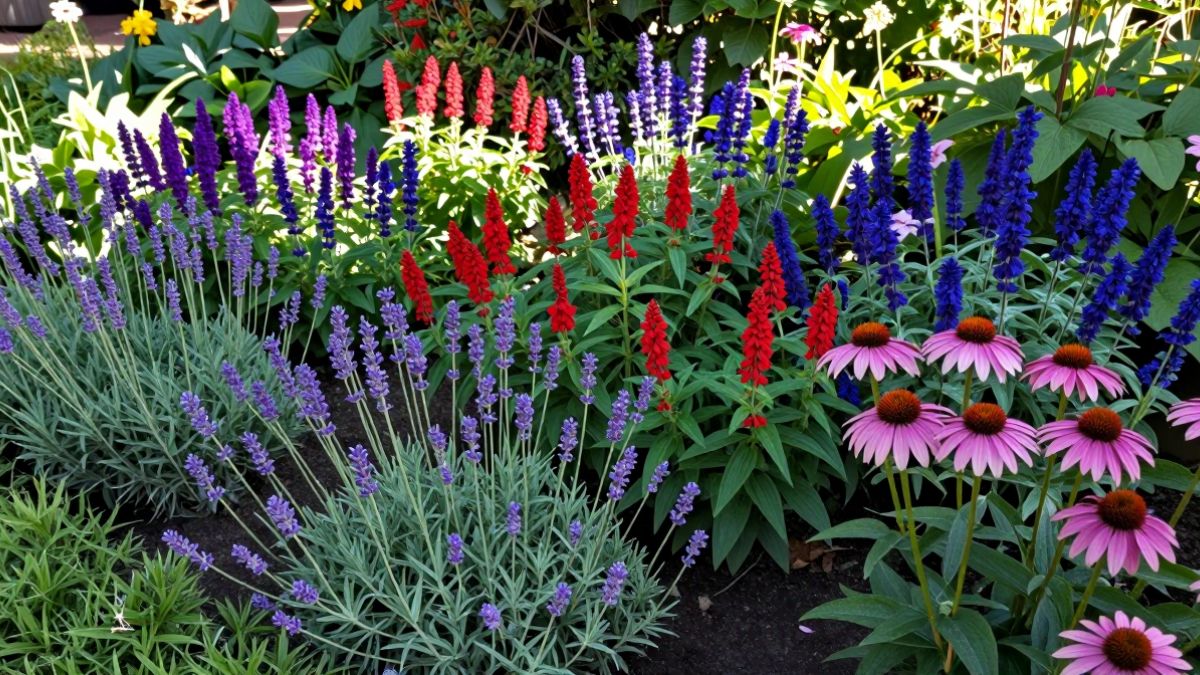
If you’ve been hunting for a plant that delivers nonstop color, feeds pollinators, and forgives the occasional gardening mishap, salvia might just be your new best friend.
We’ve all been there. You see a gorgeous plant at the nursery, bring it home with high hopes, and three weeks later it’s brown and wilted because you forgot to water it. Again. But salvia? It’s different. This powerhouse genus includes hundreds of varieties—from the classic culinary sage in your kitchen to towering ornamental spikes in electric purple and red—and most of them share one beautiful trait: they thrive on benign neglect.
Why salvia belongs in every garden
Salvia isn’t just pretty. It’s a pollinator magnet. Bees and butterflies treat salvia blooms like an all-you-can-eat buffet, drawn to the tubular flowers packed with nectar. If you want to support your local ecosystem while adding serious visual punch to your beds, this is the plant that delivers both.
And here’s the kicker: salvia blooms for months. We’re talking late spring through fall if you treat it right. Deadhead spent flowers every few weeks, and the plant just keeps pumping out new blooms like it’s on a mission.
What salvia needs to thrive
Let’s talk basics. Salvia loves full sun—at least six hours a day. Can it handle partial shade? Sure, but you’ll get fewer flowers and lankier growth. Give it the sunshine it craves and watch it explode.
Soil-wise, salvia wants well-draining ground. It doesn’t tolerate soggy roots, so if your soil is heavy clay, work in some compost or plant in raised beds. Sandy or loamy soil? Perfect. Once established, most salvias are drought-tolerant, which means you can skip the daily watering routine. A deep soak once a week during dry spells is usually enough.
Planting salvia in beds or containers
You can tuck salvia into garden beds or grow it in containers—both work beautifully. For in-ground planting, space them about 12 to 18 inches apart depending on the variety. Dig a hole as deep as the root ball, settle the plant in, backfill with soil, and water thoroughly.
Container growing? Use a pot with drainage holes and a quality potting mix. Salvia in pots will need more frequent watering than in-ground plants, but the trade-off is mobility. Move them around to catch the best light or create instant focal points on your patio.
Keeping the blooms coming
Here’s where salvia really shines. Deadheading—snipping off spent flower spikes—encourages the plant to produce more blooms instead of putting energy into seed production. Grab your pruners every couple of weeks and trim back faded flowers just above a set of leaves.
In late summer or early fall, you can give the whole plant a light trim to keep it bushy and prevent it from getting leggy. Don’t go overboard, though. A gentle shaping is all it needs.
Companion planting and garden design
Salvia plays well with others. Pair it with lavender for a drought-tolerant duo that smells incredible. Plant it alongside coneflowers or black-eyed Susans for a cottage garden vibe. Or tuck it in front of ornamental grasses for textural contrast.
The vertical flower spikes add height and structure to beds, making salvia a natural choice for middle or back-row planting. Use it to fill gaps, anchor corners, or create drifts of color that guide the eye through your garden.

A few safety notes
Most ornamental salvias are non-toxic to humans and pets, but culinary sage (Salvia officinalis) should be used in moderation. It’s safe for cooking, but consuming large amounts can cause issues for pregnant individuals or those with certain health conditions. When in doubt, stick to seasoning your roast chicken and enjoy the ornamental varieties purely for their beauty.
The bottom line
Salvia gives us so much and asks for so little. It feeds the bees, dazzles the eye, and forgives our busy schedules. If you’ve been hesitant to try something new in your garden, this is your sign. Plant salvia this season and watch your garden come alive.