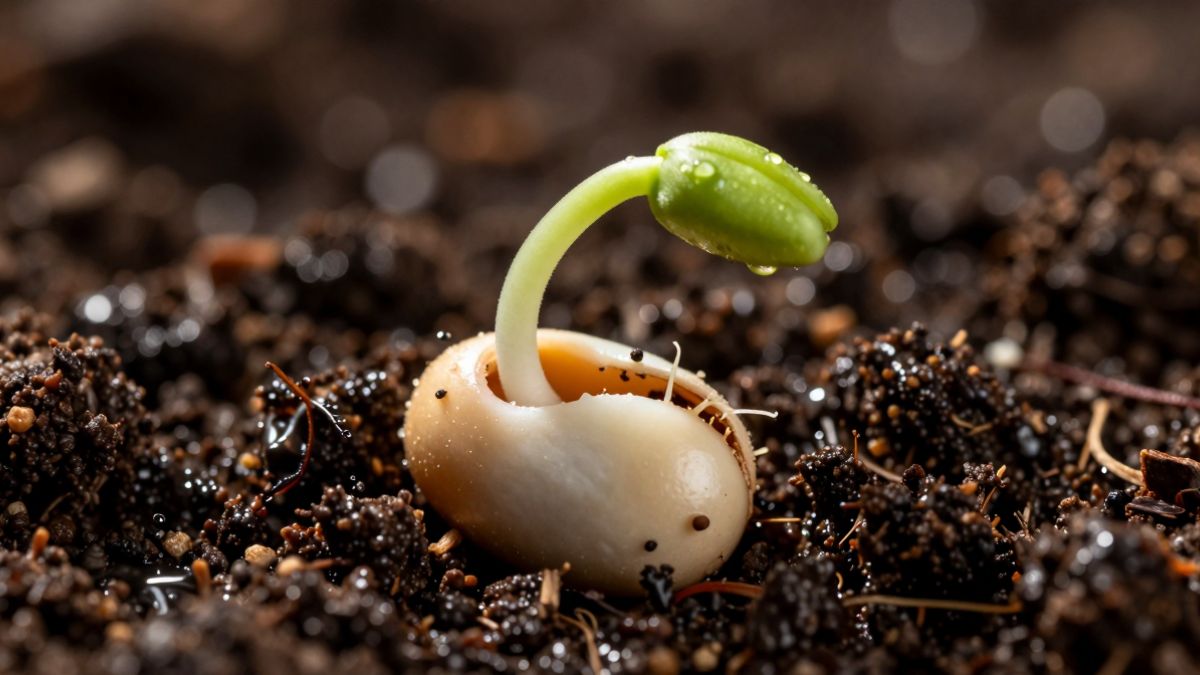
You’ve probably used the words germinate, sprout, and root interchangeably when talking about plants. Most gardeners do. But here’s the thing: each term describes a completely different stage or process in a plant’s life cycle, and mixing them up can lead to confusion when you’re following seed-starting instructions, sharing advice, or troubleshooting why your seeds aren’t “doing anything.”
Understanding the precise meaning of each word isn’t just botanical pedantry. It helps you diagnose problems faster, communicate more clearly with fellow gardeners, and write better plant notes or Instagram captions. Let’s break down what each term really means, why it matters, and give you a handful of alternatives to keep your gardening vocabulary fresh.
The 3 words people confuse and why it matters
Germinate refers to the very first stage: when a seed wakes up and the embryo inside begins to grow. Sprout (or seedling) describes what happens next, when that tiny plant pushes above the soil and starts developing leaves. Rooting is something else entirely—it’s the process of a cutting or division forming new roots, not a seed beginning life.
The confusion happens because all three involve “something starting to grow.” But if you say your seeds are “rooting” when you mean germinating, or call a freshly emerged seedling “germinated,” you’re skipping or mislabeling critical stages. That matters when you’re trying to figure out whether your seeds are viable, whether your seedlings need more light, or whether your cuttings have established themselves.
In short: germination is invisible, sprouting is visible, and rooting is a different method of propagation altogether.

Germinate: the exact moment it begins (with an example)
Germination is the internal awakening of a seed. It starts when the seed absorbs water, swells, and the embryo inside breaks dormancy. The first structure to emerge is the radicle—the embryonic root—which pushes through the seed coat and anchors into the soil.
Here’s the key: germination happens before you see anything above the soil. You can have a perfectly germinated seed sitting in your seed tray, radicle happily growing downward, and still see nothing on the surface for days.
Example: You soak tomato seeds overnight and sow them in a tray. Within 48 hours, the radicle emerges from the seed coat and begins growing downward into the compost. The seed has germinated. But you won’t see the green shoot above the soil for another 3–5 days.
If you’re checking your seed tray every morning and saying “nothing’s germinated yet,” you might actually be wrong. The germination has likely already happened underground. What you’re waiting for is the sprout.
Sprout/seedling: what changes visually
Once the radicle has anchored and the shoot (called the hypocotyl or epicotyl, depending on the plant type) pushes upward, you finally see something break the soil surface. That’s when the seed becomes a sprout or seedling.
The first leaves you see are usually cotyledons—seed leaves that were packed inside the seed. They often look different from the plant’s mature leaves: rounder, simpler, sometimes a different color. Cotyledons provide the seedling’s first burst of energy as it begins photosynthesis.
A few days or weeks later, depending on the species, the plant produces its first true leaves—the ones that look like the adult plant’s foliage. Once true leaves appear, most gardeners stop calling it a sprout and start calling it a seedling.
Visual summary:
– Germination = invisible, underground, radicle emerges.
– Sprouting = visible, above soil, cotyledons unfold.
– Seedling = true leaves appear, plant is established.
This distinction is especially useful when troubleshooting. If your seeds germinated but didn’t sprout, the problem likely happened after the radicle formed—perhaps the shoot dried out, or the soil crust was too hard. If nothing germinated at all, the issue is with seed viability, temperature, or moisture during that initial soak-and-swell phase.

Rooting/cutting propagation: a different process entirely
Now let’s talk about rooting, which has nothing to do with seeds.
When you take a cutting from a mature plant—say, a stem of basil or a leaf of a succulent—and place it in water or soil, you’re hoping it will form new roots. That’s rooting or root development. It’s a form of vegetative or asexual propagation.
Some gardeners say “I’m germinating this cutting,” but that’s technically incorrect. Germination only applies to seeds. What you’re doing is encouraging the cutting to root or strike.
Common rooting methods:
– Water propagation (placing cuttings in a jar until roots appear).
– Soil propagation (inserting cuttings into moist compost).
– Layering (bending a stem to the ground so it roots while still attached to the parent plant).
Once the cutting has developed a healthy root system, you can pot it up or plant it out. But you wouldn’t say it “sprouted”—that language is reserved for seeds.
10 quick synonyms and phrases for better plant notes and captions
If you’re documenting your garden, writing captions, or keeping a plant journal, variety in language keeps things interesting and precise. Here are ten alternatives and related terms:
- Emerge – “The radish seedlings emerged overnight.”
- Break ground – “First tomato sprouts broke ground on day 6.”
- Pop up – Casual and visual: “Three more basil seedlings popped up this morning.”
- Strike – Used for cuttings: “The lavender cuttings struck roots in two weeks.”
- Establish – “Once the seedlings establish their second set of leaves, thin them out.”
- Unfold – “Cotyledons unfold within 24 hours of sprouting.”
- Push through – “The bean sprouts pushed through the soil crust.”
- Take root – For cuttings or transplants: “The rose cutting has taken root.”
- Activate – “Soaking activates the germination process.”
- Develop true leaves – “Wait until the seedling develops true leaves before transplanting.”
Using precise language not only sounds more professional—it also helps you spot patterns and problems in your own gardening records.

Mini glossary: cotyledons, true leaves, radicle
Here’s a quick reference for the technical terms that come up when discussing germination and sprouting:
- Radicle: The embryonic root; the first part of the seedling to emerge from the seed.
- Cotyledons: Seed leaves; the first leaves to appear, often simpler in shape than true leaves.
- True leaves: The second set of leaves that resemble the mature plant’s foliage; signal that the seedling is photosynthesizing independently.
- Hypocotyl: The stem section between the radicle and cotyledons; it pushes the cotyledons above the soil in some plants.
- Epicotyl: The stem section above the cotyledons; it produces the true leaves.
- Seed coat: The outer protective shell of the seed; splits during germination.
- Dormancy: A resting state; some seeds require cold stratification or scarification to break dormancy before they’ll germinate.
Knowing these terms makes it easier to follow seed-packet instructions, understand gardening forums, and troubleshoot when things go wrong.
What to do next
Now that you know the difference, put it into practice. Next time you sow seeds, note the germination date (when you expect the radicle to emerge, even if you can’t see it) and the sprouting date (when the shoot breaks the surface). If you’re propagating cuttings, track when they begin rooting and when they’re fully established.
Keep a simple log in a notebook or your phone. Over time, you’ll build a personal database of how long each plant takes at each stage—and you’ll never again wonder whether your seeds “germinated” or just “sprouted.” Your gardening will become more precise, your troubleshooting faster, and your advice to fellow gardeners infinitely clearer.