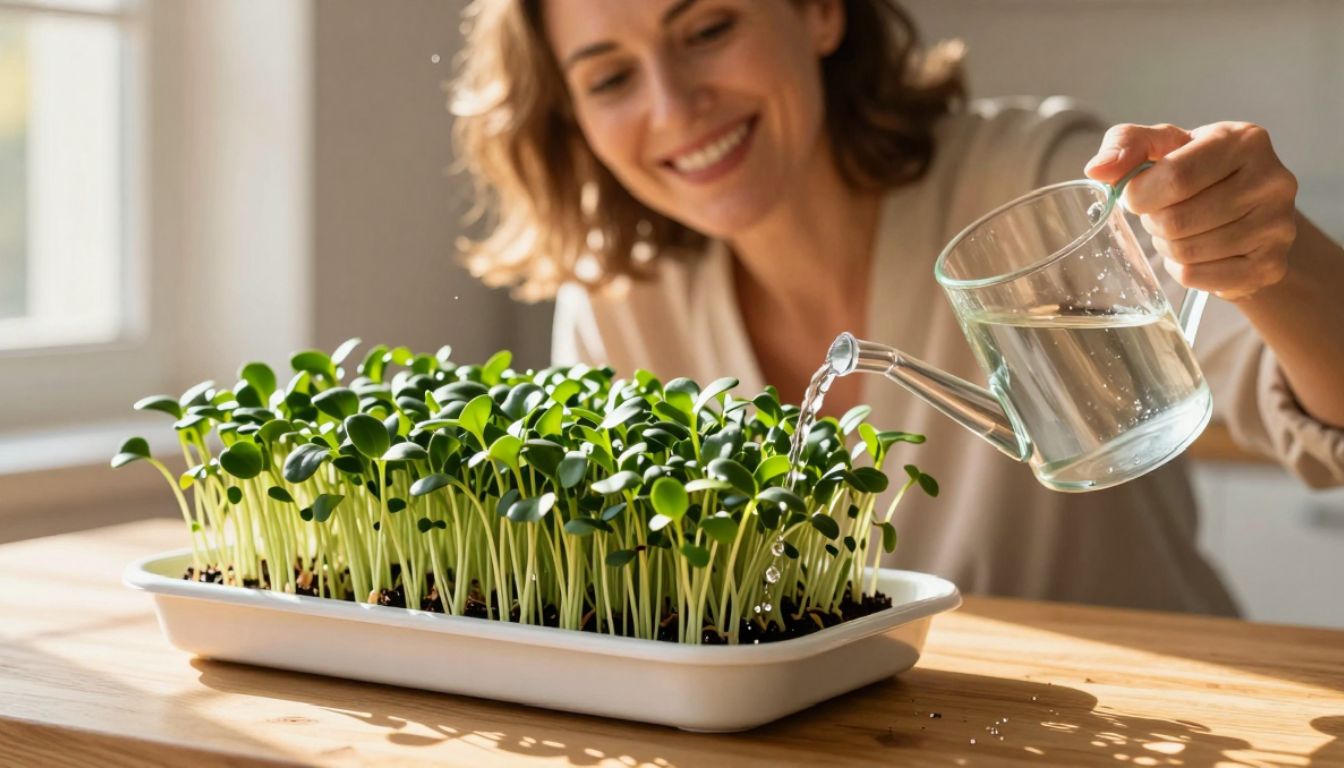
Water your chia microgreens in the morning, and they’ll grow noticeably faster than the same seeds watered at night. Same tray, same windowsill, same light—the only difference is the clock.
The reason isn’t magic. It’s evaporation. When you water in the morning, the surface moisture evaporates slowly throughout the day as air circulates and light warms the tray. By evening, the top layer is drier, which discourages mold and keeps the tiny stems clean. When you water at night, that moisture sits in place for hours in cooler, stiller air, and the surface stays wet longer. Wet surfaces invite fungus. Fungus slows growth—or stops it entirely.
Why timing changes speed
Chia seeds are fast growers, but they’re also mucilaginous. The moment they touch water, they release a gel coat. That gel is helpful for anchoring roots, but it also traps moisture against the seed hull. If the surface stays wet for too long, especially in low airflow, that gel layer becomes a breeding ground for bacteria and mold.
Morning watering gives the tray a full day to breathe. The top dries slightly, the gel firms up, and the roots stay active without sitting in stagnant moisture. Night watering does the opposite: it locks in wetness during the coolest, stillest hours, when evaporation is slowest.
The difference shows up by day four. Morning-watered trays tend to have taller, greener shoots with fewer yellow or slimy patches. Night-watered trays often show uneven growth, with some seeds lagging or developing off-smells.

The default schedule that works
Here’s the simplest routine for a standard 10×20 tray on a windowsill with moderate indoor humidity (around 40–60%):
Morning (ideally 7–9 a.m.): Lightly mist the surface or bottom-water for 5–10 minutes. The goal is to re-wet the medium without flooding it. If you’re using a tray with drainage holes, pour water into the base tray and let the soil or mat wick it up. If you’re using a solid tray with a thin layer of soil or coco coir, mist until the surface darkens but doesn’t pool.
Late afternoon (optional, 4–6 p.m.): Check the tray. If the surface looks dry or the shoots are starting to wilt slightly, give a very light mist—just enough to refresh, not soak. In most homes, this step isn’t needed every day, but it’s useful if your air is dry or your window gets strong afternoon sun.
Evening: Do nothing. Let the tray dry slightly overnight.
This rhythm mirrors how dew works outdoors: moisture arrives in the morning, evaporates during the day, and the plant rests drier at night.
Adjust for your home’s humidity
Dry home (below 40% humidity, common in winter or air-conditioned spaces): You may need to mist twice a day—morning and late afternoon—because the tray dries out faster. Watch for curling leaves or crispy edges; those are signs the air is pulling moisture out too quickly. A small humidifier near the tray can help, or you can leave the cover on for an extra day.
Humid home (above 60%, common in coastal areas or basements): Stick to once-a-day morning watering, and make sure air circulates around the tray. A small fan on low, placed a few feet away, will help the surface dry between waterings. If you see any white fuzz or sour smell, you’re watering too much or too often—skip a day and increase airflow.
Day-by-day watering shifts
Day 0 (sowing day): Soak the medium thoroughly before you scatter the seeds. No additional water needed after sowing. Cover the tray with a lid or another tray to trap humidity.
Day 1–2 (covered, germination phase): No watering. The cover keeps moisture in. Check once a day to make sure condensation is forming on the inside of the lid. If the surface looks dry, mist lightly in the morning, then replace the cover.
Day 3 (uncover day): Remove the cover in the morning. The seeds should have sprouted into pale, thread-like shoots. Mist lightly right after uncovering, then place the tray in indirect light. From this point forward, water every morning.
Day 4–6 (growth phase): Water every morning, check in the afternoon if needed. The shoots will green up and grow 1–2 inches tall. By day six, they’re usually ready to harvest.
The biggest mistake people make is watering whenever they remember, at random times of day. Consistency beats frequency. A tray watered at 8 a.m. every day will outgrow a tray watered twice a day at random hours.
Set an alarm and compare your next tray
If you’ve been watering your microgreens whenever it’s convenient and your results have been uneven—some trays great, some trays moldy or slow—try this experiment:
Set a daily alarm for 8 a.m. (or whatever morning time works for you). Water your chia tray at that exact time for six days straight. Keep notes: how the tray looks each morning, how fast it dries, when the greens hit 2 inches.
Then grow a second tray and water it at night, around 9 or 10 p.m., for six days. Compare the two.
Most people see a visible difference by day five: the morning tray is taller, greener, and cleaner. The night tray is shorter, patchier, or smells faintly sour.
This isn’t about being perfect. It’s about giving your seeds a rhythm they can follow. Chia microgreens grow fast when they get predictable moisture and plenty of time to dry. Morning watering gives them both.