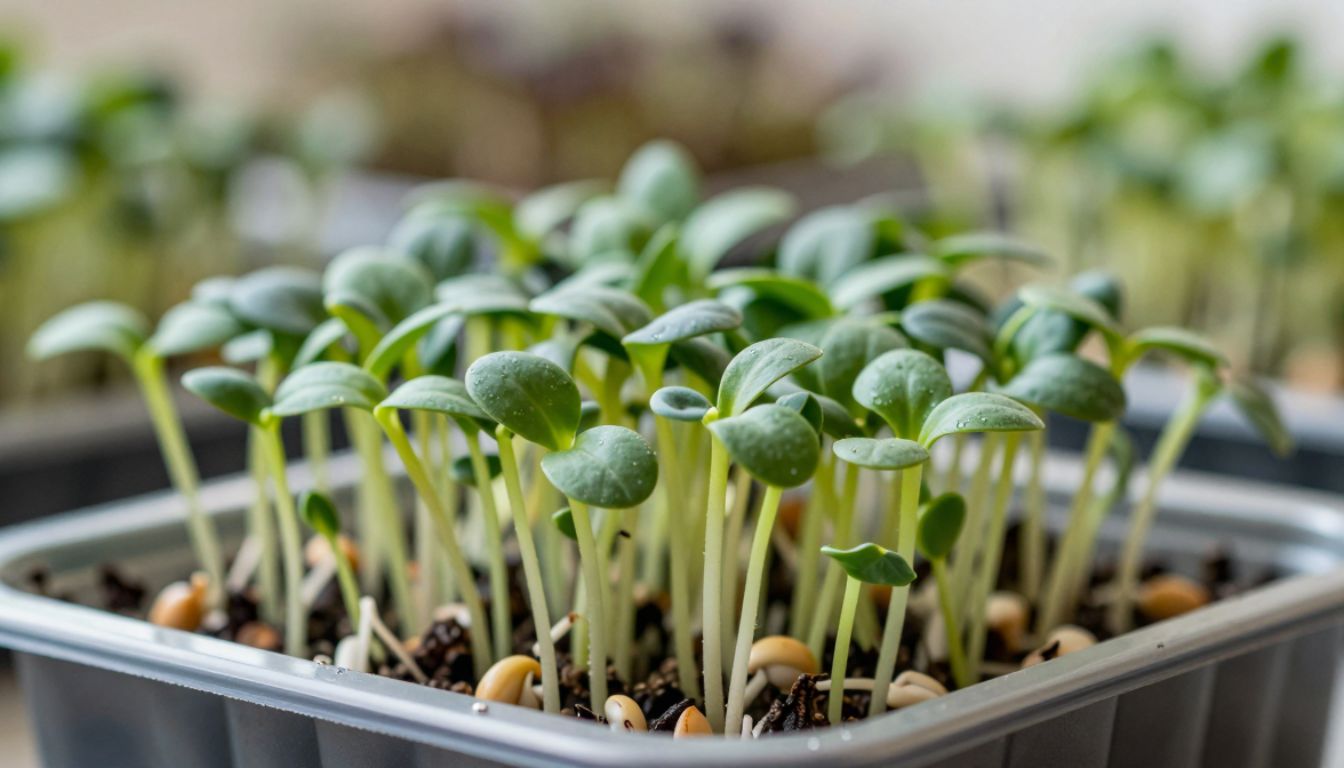
You’ve probably scrolled past dozens of tutorials promising lush chia microgreens in seven days—every single one insisting you need grow lights, a sunny windowsill, or at least a bright corner. Here’s the truth: chia microgreens don’t need light to sprout. In fact, chasing light during the first critical days can distract you from what actually determines success: moisture balance, airflow, and the precise moment you transition from germination to growth.
This myth has sent countless beginners down the wrong path, investing in expensive lighting setups before they’ve even mastered the basics. Let’s break down what chia seeds actually require—and when light finally enters the picture.
The germination phase needs darkness, not light
Chia seeds are mucilaginous, meaning they release a gel-like coating when wet. This gel is their survival mechanism: it locks in moisture and protects the embryo. During the first 24 to 48 hours, chia seeds are focused entirely on hydration and breaking dormancy. Light plays zero role here.
In fact, many growers find that covering trays with a breathable cloth or placing them in a dark cupboard accelerates germination. The seeds are drawing on stored energy inside the endosperm, not photosynthesis. What they need is consistent moisture contact and stable temperature—ideally between 65°F and 75°F (18°C to 24°C).
If you’re misting obsessively or flooding the tray because you think light will “activate” growth, you’re solving the wrong problem. Overwatering during germination is the number one killer of chia microgreens, not lack of light.
Moisture management is the real gatekeeper
Chia’s gel coat is both a blessing and a curse. It holds water beautifully, but it also creates a suffocation risk if the medium stays too wet. Here’s the balance you’re aiming for:
- Initial soak: Mist the growing medium (coconut coir, hemp mat, or even paper towel) until damp but not pooling.
- Twice-daily misting: Use a fine spray bottle. The goal is to keep the gel moist without creating standing water.
- Bottom watering after day 3: Once roots penetrate the medium, switch to adding water beneath the tray. This prevents mold on the gel layer and encourages roots to dive deeper.
Many beginners confuse “moist” with “wet.” If you can squeeze water out of your medium, it’s too wet. Chia seeds will rot in 24 hours under those conditions, long before light becomes relevant.
Airflow prevents the silent killer: mold
Because chia gel traps moisture, it creates a microclimate that mold loves. This is where airflow becomes non-negotiable. You don’t need a fancy fan—just avoid sealing trays in plastic domes or stacking them in closed cabinets.
Simple airflow strategies:
- Crack a window in the grow room, even in winter (as of late December 2025, indoor heating can make air stagnant).
- Use a small desk fan on low, pointed away from the trays but circulating air in the room.
- Leave dome lids propped open with a pencil or remove them entirely after day two.
Mold on chia microgreens looks like white fuzz on the gel or stems. It’s not the same as root hairs, which are thin, uniform, and appear along the root, not the stem. If you see mold, it’s almost always an airflow or moisture issue—never a light issue.
When light finally matters (and what kind)
Around day 3 or 4, once the seeds have sprouted and the first tiny leaves (cotyledons) begin to emerge, light becomes essential. This is when the plant shifts from living off stored energy to photosynthesis. But even here, the common advice is overkill.
Chia microgreens don’t need direct sunlight. In fact, harsh midday sun through a window can scorch delicate leaves. What works:
- Indirect bright light: A north-facing window (in the Northern Hemisphere) or a spot 3–4 feet from a south-facing window.
- 12–16 hours of light per day: If using a grow light, a basic full-spectrum LED positioned 6–12 inches above the tray is plenty. No need for high-wattage systems.
- Watch for leggy growth: If stems stretch thin and pale, they’re searching for light. Move the tray closer to the source or add a supplemental bulb.
But remember: light is the last variable to adjust, not the first. If your chia microgreens are failing, check moisture and airflow before you buy a grow light.
The medium matters more than you think
Chia seeds don’t need soil. Their gel anchors them to almost any surface, and their roots are efficient enough to pull nutrients from minimal substrate. Popular choices:
- Coconut coir: Retains moisture evenly, resists mold better than soil, and is reusable.
- Hemp grow mats: Pre-cut, clean, and compostable. Ideal for beginners.
- Paper towels or unbleached cloth: Works for small experiments, but dries out faster.
Avoid dense potting soil. It holds too much water and compacts around the gel, starving roots of oxygen. Chia thrives in airy, moisture-retentive mediums that let roots breathe.
If you’re reusing trays, sterilize them with diluted hydrogen peroxide (1 part peroxide to 10 parts water). Old biofilm or mold spores will sabotage your next batch faster than any lighting mistake.
Timing the harvest (before bitterness sets in)
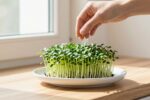
Chia microgreens are ready to harvest 7 to 10 days after seeding, depending on temperature and light. You’re looking for the first true leaves to appear beyond the cotyledons. The flavor is mild, slightly nutty, and faintly grassy—perfect for smoothies, salads, or garnishes.
Wait too long, and the leaves turn bitter as the plant channels energy into stem growth. Harvest in the morning after the gel has dried slightly; wet greens bruise and spoil faster in the fridge.
Use clean scissors and cut just above the medium. Rinse gently in a colander, spin dry, and store in an airtight container lined with paper towel. They’ll keep for 3–5 days in the refrigerator.
What to do next
If you’ve been blaming light for failed chia microgreens, start fresh with this checklist:
- Soak your medium until damp, not wet.
- Sprinkle seeds evenly—about 1 tablespoon per 10×10-inch tray.
- Mist twice daily for the first 3 days, keeping the gel moist.
- Ensure airflow from day one.
- Introduce light on day 3–4, once cotyledons emerge.
- Harvest on day 7–10, before true leaves fully mature.
The next time you see a tutorial obsessing over grow lights, remember: chia seeds spent the first 48 hours in total darkness for thousands of years before humans invented LEDs. Respect the germination phase, manage moisture and airflow, and light will do its job when the time is right—not a moment sooner.