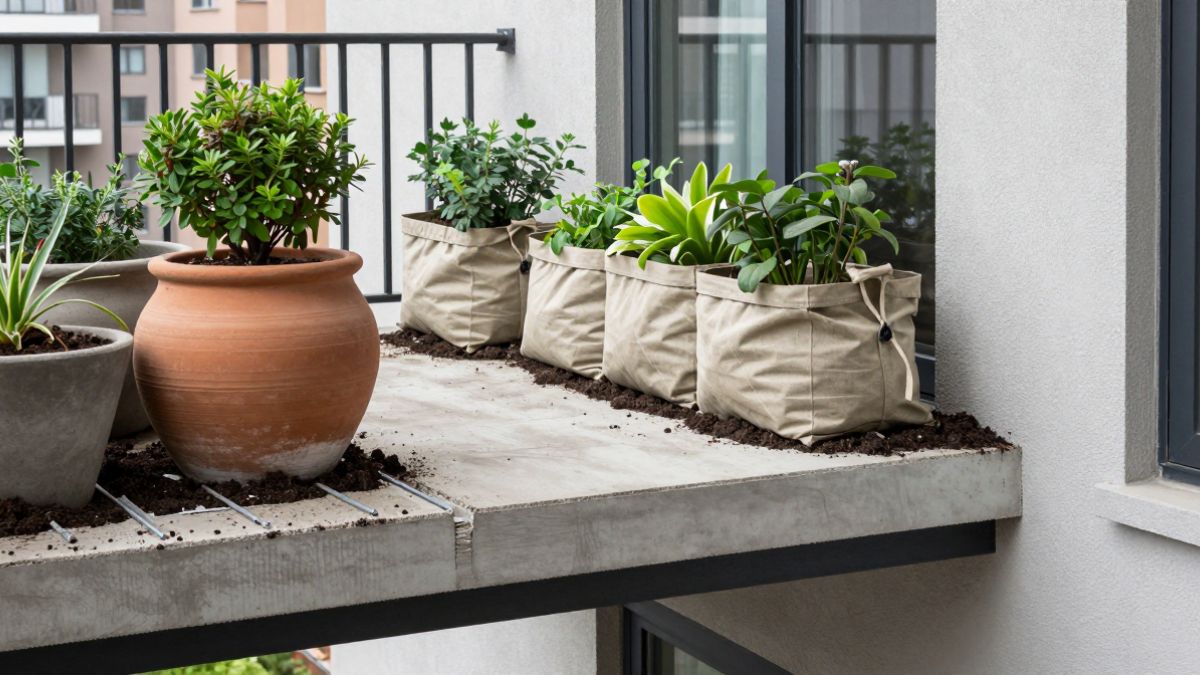
A single terrace planter filled with wet soil can weigh as much as three full-grown adults—and most apartment dwellers have no idea their balcony wasn’t designed for that kind of load.
As December rains sweep across India, thousands of urban gardeners are unknowingly pushing their terraces to the limit. The keyword “bearing capacity of soil” has surged on Google Trends, and for good reason: structural engineers are seeing more distress calls from housing societies where enthusiastic gardeners have turned rooftops into farms—without checking if the slab beneath can handle it.
This isn’t about fear-mongering. It’s about smart, safe gardening that lets you grow your greens without risking cracks, leaks, or worse. Here’s everything you need to know.
What ‘bearing capacity’ actually means (in plain language)
Bearing capacity is the maximum weight a structure—your terrace slab, in this case—can support per square metre without failing. Most residential terraces in India are designed to handle around 150 to 200 kg per square metre as a live load (the weight of movable things like furniture, people, and yes, planters).
But here’s the catch: that number includes everything. Your potted plants, the water in the soil, the pots themselves, you standing there with a watering can, and any furniture or storage.
When you add a raised bed or a row of large planters, you’re concentrating weight in one spot—and that’s where trouble starts.

Where all that weight comes from
Let’s break down the contributors:
- Dry soil: Garden soil weighs roughly 1,200 to 1,600 kg per cubic metre. A 1-metre × 1-metre raised bed that’s 30 cm deep holds 0.3 cubic metres of soil—that’s 360 to 480 kg of soil alone.
- Water: Wet soil can weigh 30–50% more. After a heavy monsoon downpour, that same bed could hit 600 kg or more.
- Pots and containers: A large ceramic or concrete planter can weigh 10–25 kg empty.
- People: You, your family, guests—each person adds 60–80 kg.
- Accessories: Trellises, benches, decorative stones, and garden tools all count.
Now imagine six large planters lined up along a 10-square-metre balcony. You’re easily crossing 1,500 kg—and that’s before the rain.
A quick calculation example
Let’s say you want to build a raised bed: 1.2 metres long, 0.6 metres wide, and 0.4 metres deep.
- Volume: 1.2 × 0.6 × 0.4 = 0.288 cubic metres
- Dry soil weight: 0.288 × 1,400 kg/m³ = 403 kg
- Wet soil weight (after rain): 403 × 1.4 = 564 kg
- Wooden frame: ~15 kg
- Total wet weight: ~580 kg
That bed occupies just 0.72 square metres of floor space. The load per square metre? Over 800 kg/m²—four times the typical design limit.
This is why distributed loads matter. Spread that same soil across ten smaller pots, and each square metre carries far less.

How rain changes everything
Monsoon season (June to September) and winter showers (December to February) are critical windows. Soil acts like a sponge: it absorbs water, holds it, and gains weight fast.
If your planters don’t have proper drainage, water pools at the bottom. A 50-litre planter can hold an extra 20–30 kg of water after a single downpour. Multiply that across a dozen pots, and you’ve added 200+ kg overnight.
Worse, stagnant water can seep into terrace waterproofing, causing long-term damage—cracks, seepage into the floor below, and costly repairs.
Lighter alternatives: how to garden without the weight
You don’t have to give up your terrace garden. You just need to rethink your growing medium and containers.
Soil-less and lightweight mixes:
- Cocopeat (coir pith): Weighs about 400–600 kg/m³ when moist—less than half the weight of soil. Retains water well, perfect for vegetables and herbs.
- Compost: Adds nutrients and is lighter than mineral soil (around 600–800 kg/m³).
- Perlite and vermiculite: Ultra-light additives that improve drainage and aeration. Perlite weighs just 80–150 kg/m³.
- LECA (Lightweight Expanded Clay Aggregate): Porous clay balls, around 300–400 kg/m³. Excellent for drainage layers.
A 50:50 mix of cocopeat and compost can cut your soil weight in half while still growing healthy plants.
Lightweight planters:
- Fabric grow bags: Weigh almost nothing, promote air pruning of roots, and drain beautifully.
- Plastic or resin pots: Far lighter than ceramic or concrete.
- Recycled containers: Old buckets, crates, or wooden boxes—just ensure drainage holes.
Avoid heavy terracotta or stone pots unless you’re planting directly on the ground floor.

Safer design: how to distribute and protect
Distribute the load:
- Place planters along the edges and over beams or columns, where the slab is strongest.
- Avoid clustering heavy pots in the centre of a span.
- Use many small pots instead of a few giant ones.
Modular and mobile:
- Build raised beds in sections (e.g., four 60 cm × 60 cm modules instead of one 1.2 m × 1.2 m bed).
- Use wheeled plant stands so you can shift weight around.
Drainage and waterproofing:
- Line the terrace floor with waterproof trays or saucers under every pot.
- Ensure all containers have drainage holes.
- Install a drainage layer (LECA or gravel) at the bottom of planters.
- Check your terrace waterproofing annually. If it’s compromised, fix it before adding plants.
Weight tracking:
- Keep a rough tally of your total garden weight. If you’re nearing 100–120 kg per square metre, pause and reassess.
When to consult an engineer or your housing society
Before you build a raised bed, install a large water tank, or add heavy hardscaping (pavers, decking), get clearance.
- Housing societies: Many have bylaws restricting terrace modifications. Check your maintenance agreement.
- Structural engineers: If your building is older (pre-2000s), or if you notice any cracks, sagging, or water seepage, get a professional load assessment. It costs ₹3,000–₹10,000 and can save you lakhs in repairs.
- Architects: If you’re planning a full terrace makeover, an architect can design a layout that respects load limits and drainage.
Don’t assume your terrace is “strong enough.” Assumptions are expensive.

Your next steps
If you already have a terrace garden:
- Audit your setup: Count your pots, estimate soil volume, and calculate rough weight.
- Switch to lighter mixes: Replace heavy soil with cocopeat-compost blends in new plantings.
- Improve drainage: Add trays, check for standing water after rain.
- Redistribute: Move heavy pots toward edges and structural supports.
If you’re starting fresh:
- Plan light from day one: Choose fabric bags, plastic pots, and soil-less mixes.
- Start small: A dozen 10-litre pots are safer—and easier to manage—than three 100-litre planters.
- Consult early: Talk to your society and, if needed, an engineer.
Gardening on a terrace is one of the most rewarding ways to reconnect with nature in a crowded city. But the best garden is a safe garden—one that grows food, not cracks in your ceiling.