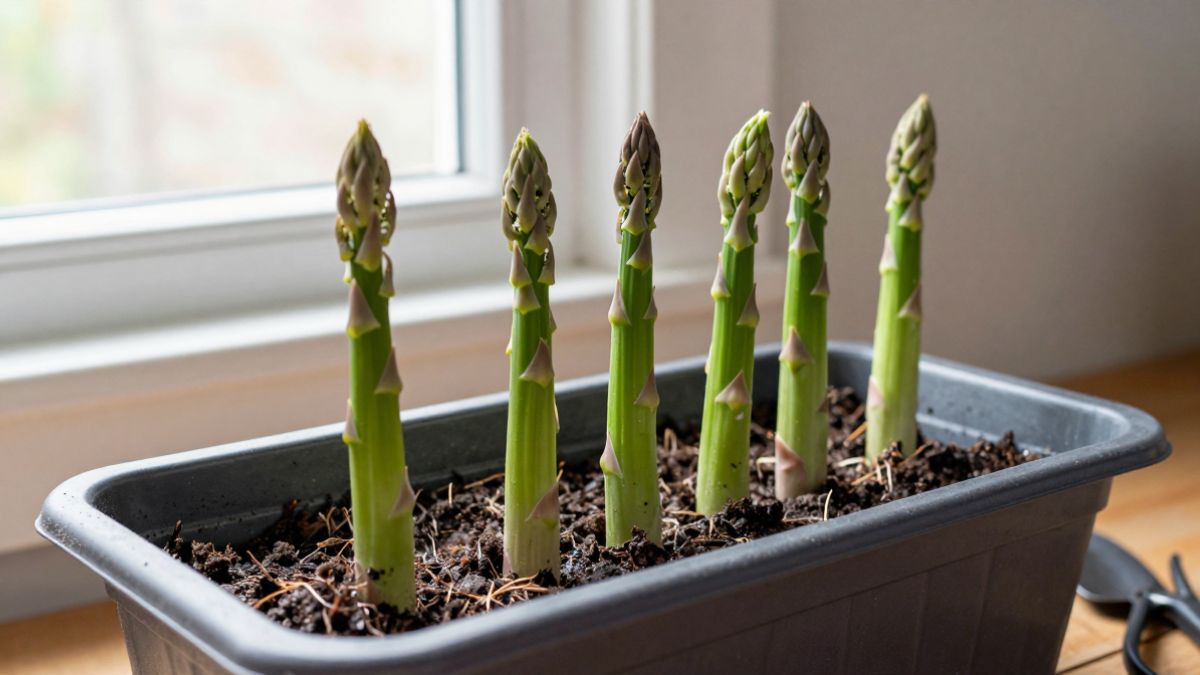
You’ve probably scrolled past asparagus at the supermarket and never imagined it growing on your own balcony. It sounds like something only farmers with acres of land can pull off. But here’s the truth: asparagus thrives in deep pots, and Indian balconies—especially during the cooler months from December through February—offer the perfect launch window.
The trick isn’t luck or a green thumb. It’s understanding a few non-negotiable rules that most beginners skip, then watching those elegant spears push through the soil like clockwork.
Seeds vs crowns: what actually works in India
Walk into any nursery and you’ll face a choice: asparagus seeds or one-year-old crowns. Seeds are cheaper, often around ₹50 for a packet, but they demand patience. You’re looking at three years before the first real harvest. Crowns—those gnarly, spider-like root bundles—cost between ₹200 and ₹400 each, but they cut your wait time to just one year.
For Indian climates, crowns are the smarter bet. Our growing season is shorter in most regions, and crowns give you a head start. Look for varieties like ‘Mary Washington’ or ‘Jersey Knight’, both of which tolerate warmer spells better than European heirlooms. If you’re buying online, check that the crowns arrive plump and firm, not shriveled. A dried-out crown won’t recover, no matter how much you water it.

The pot size mistake everyone makes
Asparagus roots grow deep—really deep. A shallow 12-inch pot might work for tomatoes, but asparagus will sulk and produce thin, bitter spears. You need a container at least 18 inches deep, ideally 24 inches. Width matters too: a single crown needs about 12 inches of horizontal space, so a pot that’s 18 inches wide can comfortably hold two crowns.
Drainage is non-negotiable. Drill extra holes if your pot doesn’t have enough. Asparagus hates waterlogged soil, and root rot will kill your plant faster than any pest.
For the soil mix, skip pure garden soil. It compacts too quickly in pots. Blend equal parts cocopeat, well-rotted compost, and perlite or sand. This combination drains fast but holds just enough moisture. Add a handful of neem cake at the bottom for slow-release nitrogen and pest deterrence.
Planting depth and spacing: the 6-inch rule
Dig a trench in your pot about 6 inches deep. Spread the crown’s roots out like a starfish at the bottom, then cover with 2 inches of soil. As the shoots emerge over the next few weeks, gradually fill in the trench until the soil is level with the pot’s rim. This layering technique encourages strong root development and prevents the crown from drying out.
If you’re planting multiple crowns, keep them at least 12 inches apart. Crowding leads to competition for nutrients, and you’ll end up with skinny spears that aren’t worth the effort.
Water thoroughly after planting, then let the top inch of soil dry out before watering again. Asparagus is surprisingly drought-tolerant once established, but during the first month, consistent moisture is critical.

Feeding schedule: when and what to use
Asparagus is a heavy feeder. During the growing season—March through June in most of India—apply a balanced liquid fertilizer (10-10-10 NPK) every two weeks. Dilute it to half the recommended strength to avoid burning the roots.
Once the ferns develop (those feathery, tree-like structures), switch to a high-potassium feed. Potassium strengthens the crown for next year’s harvest. A handful of wood ash mixed into the topsoil every month works beautifully if you don’t want to buy commercial fertilizer.
In the monsoon, ease off the feeding. Excess nitrogen during the rainy season encourages soft, disease-prone growth. Resume your schedule in September when the plant starts storing energy for the next spring.
When to harvest—and the one rule you can’t break
This is where most beginners destroy their crop. If you planted crowns this December, you’ll see spears emerge around March 2026. Do not cut them. Let every single spear grow into a fern. The plant needs that foliage to photosynthesize and build a strong root system.
In the second year, you can harvest lightly—maybe three or four spears per crown over a two-week window in early spring. Cut them when they’re 6 to 8 inches tall and as thick as your finger. Use a sharp knife and slice at soil level.
From the third year onward, you can harvest for six to eight weeks each spring. Once the spears start emerging thinner than a pencil, stop cutting and let the ferns grow. This signals the crown is exhausted and needs to recharge.

The mistakes that kill balcony asparagus
Shallow pots are the number one killer. If your plant looks stunted or the spears are thin and woody, check the root depth. Asparagus roots can stretch over a meter down in open ground, and even in a pot, they need room to spread.
Early harvesting is the second mistake. It’s tempting to cut those first spears, but patience pays off. A weak crown produces weak spears for years.
Inconsistent watering confuses the plant. Asparagus can handle dry spells, but erratic wet-dry cycles stress the roots and reduce yields. Set a reminder on your phone if you have to, but keep the soil evenly moist during the growing season.
Finally, ignoring the ferns is a mistake. Those wispy green branches are doing the heavy lifting, converting sunlight into stored energy. If you cut them back too early or let pests chew them up, next year’s harvest will suffer. Spray neem oil every two weeks during the monsoon to keep aphids and caterpillars away.
Asparagus won’t give you instant gratification, but it will give you something better: a perennial crop that returns every spring for 15 to 20 years. Plant your crowns this week while the weather is cool, follow the depth and feeding rules, and by 2027, you’ll be slicing fresh spears for your morning omelette. No farm required.