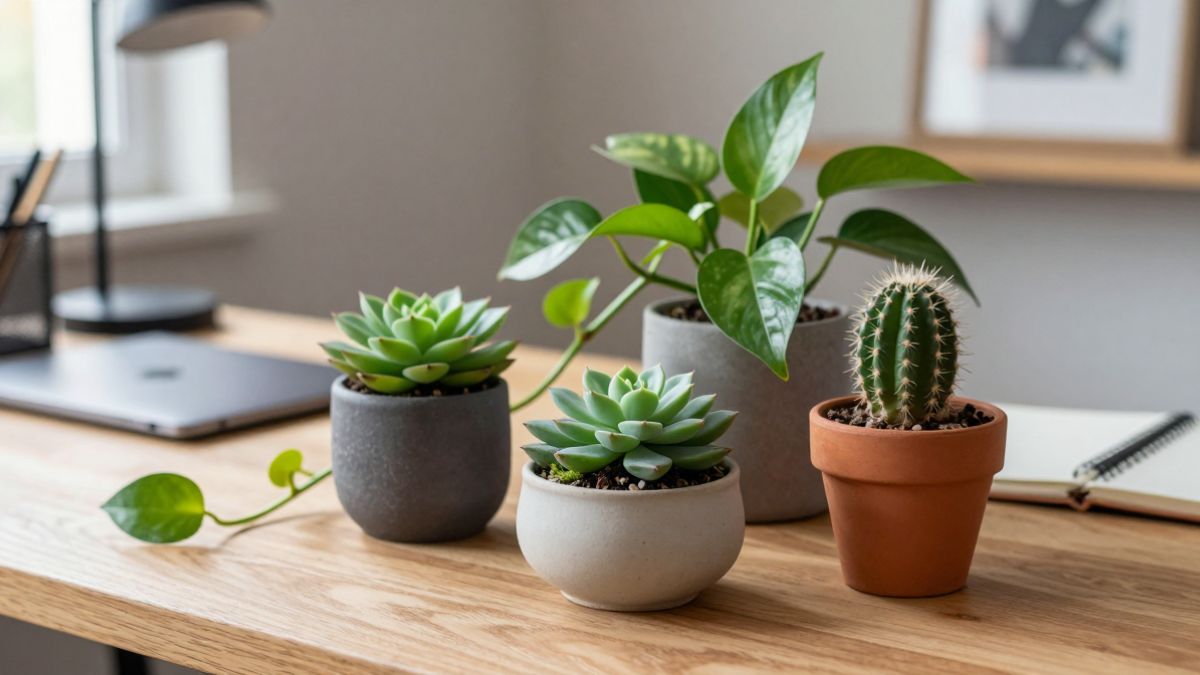
Your snake plant looked so promising on Monday morning. By Friday afternoon, it’s drooping like it’s given up on life—and honestly, same. The problem isn’t you. It’s that most desk-plant advice ignores the reality of office environments: air conditioning that runs like a wind tunnel, fluorescent lighting that wouldn’t sustain a mushroom, and weekend watering gaps that turn three days into a plant eternity.
If you’ve killed three succulents this year or watched a pothos turn crispy under the AC vent, this isn’t about having a black thumb. It’s about choosing plants that can handle the specific neglect your workspace offers.
The real constraints nobody mentions
Office desks aren’t living rooms. The light is inconsistent—sometimes you’re under a window, sometimes you’re in a fluorescent cave three cubicles deep. The air conditioning cycles on and off, dropping humidity and creating random drafts. And unless you’re watering plants on Saturday mornings at the office (you’re not), every weekend is a mini-drought.
Most online lists recommend plants that need “bright indirect light” and “consistent moisture.” Great. Your desk offers neither. What you need are plants that tolerate low light, forgive dry spells, and don’t sulk when the AC kicks in.
9 plants that actually survive desk life
High tolerance (low to medium light)
ZZ plant (Zamioculcas zamiifolia): Thick, waxy leaves store water like a camel. Thrives on neglect. Water every 2–3 weeks. If it starts looking sad, you’re probably overwatering.
Pothos (Epipremnum aureum): The cockroach of houseplants (compliment). Grows in water, soil, or seemingly pure spite. Tolerates fluorescent light. Water when the top 5 cm of soil is dry. Wipe dust off leaves monthly so it can actually photosynthesize.
Snake plant (Sansevieria trifasciata): Vertical, architectural, nearly indestructible. Handles dry air and low light. Water every 3–4 weeks in winter, every 2 weeks in summer. Root rot is the only real threat—let it dry out completely between waterings.
Medium light (near a window or under decent office lighting)
Spider plant (Chlorophytum comosum): Produces baby plantlets you can gift to coworkers (or hoard). Likes moderate light and consistent watering—every 7–10 days. Brown tips mean low humidity or tap water with too much fluoride; switch to filtered water.
Peperomia (Peperomia obtusifolia): Compact, glossy, slow-growing. Doesn’t sprawl across your keyboard. Water every 10–14 days. Prefers to dry out between waterings. Thick leaves mean it can handle a missed week.
Chinese evergreen (Aglaonema): Variegated leaves that look expensive. Tolerates low light but shows better color near a window. Water every 1–2 weeks. Sensitive to cold drafts—don’t place directly under an AC vent.
Bright light (windowsill or near glass)
Jade plant (Crassula ovata): A succulent that doesn’t die the moment you look away. Needs bright light to stay compact. Water every 2–3 weeks. Let soil dry completely. If leaves wrinkle, it’s thirsty. If they’re mushy, you’ve overwatered.
Aloe vera: Medicinal and low-maintenance. Needs bright light and infrequent watering—every 3 weeks. Use terracotta pots to avoid soggy roots. If it turns brown, it’s getting sunburned (yes, even indoors near south-facing windows in India).
Haworthia: Tiny, architectural, perfect for small desks. Bright indirect light. Water every 2–3 weeks. Stays compact and doesn’t sprawl.
One-page care cheat sheet
Watering: Stick your finger 3–5 cm into the soil. If it’s dry, water until it drains out the bottom. If it’s damp, wait. Most desk plants die from overwatering, not underwatering.
Leaf maintenance: Dust blocks light. Wipe leaves with a damp cloth every 2–3 weeks. It’s boring but makes a visible difference.
Rotation: Turn your plant 90 degrees every week so it doesn’t grow lopsided toward the light source.
Drainage: Every pot needs a drainage hole. Non-negotiable. If your cute ceramic pot doesn’t have one, use it as a decorative outer sleeve and keep the plant in a plastic nursery pot inside.

Why self-watering pots can backfire
Self-watering pots sound genius—fill the reservoir, forget about it for weeks. The problem: most office plants prefer to dry out between waterings. A constant water reservoir can lead to root rot, especially in low light where evaporation is slow.
If you travel frequently or genuinely forget to water, self-watering pots work for pothos or spider plants. For succulents, ZZ plants, or snake plants, skip them entirely.
Pest prevention in shared workspaces
Fungus gnats love overwatered soil. If you see tiny flies hovering around your plant, let the soil dry out completely and add a 1 cm layer of sand or pebbles on top to interrupt their breeding cycle.
Spider mites show up as tiny webs under leaves. Wipe them off with a damp cloth and spray the plant with water weekly to keep humidity up.
Mealybugs look like tiny cotton balls. Dab them with rubbing alcohol on a cotton swab. Quarantine the plant if you’re in a shared office—bugs spread fast.

Rescue guide: what to do when things go wrong
Drooping leaves: Underwatering (soil bone-dry) or overwatering (soil soggy, roots brown and mushy). Check the roots. If they’re brown and slimy, trim them, repot in fresh soil, and water less.
Yellow leaves: Usually overwatering or poor drainage. Let the soil dry out. If the pot has no drainage hole, repot immediately.
Brown tips: Low humidity (common with AC), fluoride in tap water, or fertilizer burn. Switch to filtered water, mist occasionally, or move the plant away from direct AC airflow.
Leggy growth: Not enough light. Move closer to a window or add a small desk lamp with a daylight bulb (5000–6500K).
Fungus gnats: Overwatering. Let the top 5 cm of soil dry out completely between waterings. Add a sand layer on top.
What to do this week
Pick one plant from the list that matches your desk’s light level. Buy it in a nursery pot with drainage. Place it where you’ll see it daily—not hidden behind your monitor. Water it once, then set a phone reminder for 10 days from now to check the soil.
That’s it. No complicated feeding schedules, no humidity trays, no grow lights. Just one plant that can handle your office reality. If it survives until February, add a second one. By mid-2026, you’ll have a desk that looks like you have your life together—even if the plant is doing all the heavy lifting.