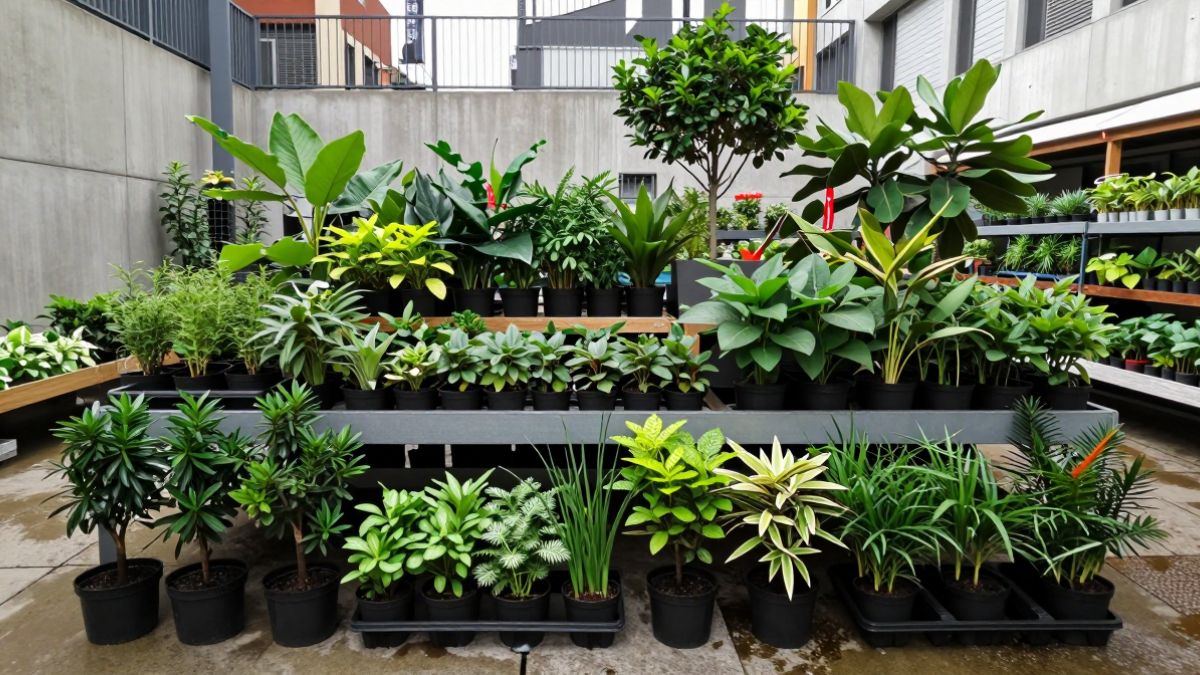
Walk into any urban nursery in Mumbai or Bangalore and you’ll notice something odd: thousands of plants thriving in spaces smaller than your balcony. No magic. No expensive gadgets. Just three obsessions—light, airflow, and drainage—executed with ruthless consistency.
Most of us kill plants not because we lack a green thumb, but because we ignore the systems that commercial growers rely on daily. This December, as the winter sun sits lower and balconies stay cooler, it’s the perfect time to steal those systems and turn your tiny outdoor space into a low-maintenance green zone.
What urban nurseries optimize (and you probably ignore)
Nurseries don’t guess. They measure light duration, track airflow patterns, and obsess over drainage. Walk through any wholesale plant market in Pune or Delhi, and you’ll see shade nets angled precisely, benches raised off the ground, and pots with drainage holes the size of ten-rupee coins.
At home, we do the opposite. We place pots directly on waterproof balcony floors, block airflow with dense clusters, and assume “some sunlight” is enough. Then we wonder why roots rot or leaves yellow within weeks.
The fix isn’t more effort. It’s copying the nursery checklist: four to six hours of direct morning light for most plants, gaps between pots for air circulation, and every single pot elevated at least two centimeters off the floor using pot feet or broken tiles.

The ‘3-zone’ balcony layout nurseries use
Commercial growers divide their space into sun, semi-shade, and deep shade zones. You can do the same on a balcony in under ten minutes.
Zone 1 (Sun zone): The railing edge or corner that gets uninterrupted morning sun until 11 a.m. Reserve this for herbs like coriander, mint, and curry leaves, or flowering plants like marigolds and zinnias. In India’s winter months, this zone stays warm enough for most tropicals without scorching.
Zone 2 (Semi-shade zone): One meter back from the railing, or under a partial roof overhang. Bright indirect light for four to five hours. Perfect for pothos, snake plants, peace lilies, and ferns. This is your largest zone—use it for the bulk of your collection.
Zone 3 (Deep shade zone): The back wall or the corner that never sees direct sun. Reserve it for ZZ plants, cast iron plants, or storage. Don’t force sun-loving plants here; they’ll stretch, pale, and eventually collapse.
Mark these zones mentally or with masking tape on the floor. Move plants only if they show stress signals—yellowing (too much light), stretching (too little), or wilting (wrong watering schedule).
Soil mix that prevents root rot
Nurseries never use garden soil alone. They blend three components in a 40-30-30 ratio: coco peat (or peat moss), compost, and perlite (or coarse sand).
Why? Garden soil compacts in pots, choking roots and trapping water. The nursery mix stays loose, drains fast, and still holds enough moisture for a day or two.
You can buy pre-mixed potting soil from any garden center in Chennai, Hyderabad, or Kolkata for ₹40–₹80 per kilogram. Or mix your own:
- 40% coco peat: Retains moisture without becoming soggy. Available in compressed blocks; soak and fluff before use.
- 30% compost: Adds nutrients. Use well-rotted cow manure or vermicompost from local suppliers.
- 30% perlite or coarse river sand: Creates air pockets and speeds drainage. Perlite is lighter; sand is cheaper.
Mix in a large bucket, water lightly, and fill pots. Never reuse old potting mix without sterilizing it in direct sun for two days—nurseries discard or sterilize theirs to avoid pest carryover.

Watering schedule by season
Nurseries water by weight and season, not by calendar days. In December and January, when temperatures in North India drop to 10–15°C at night, evaporation slows. Overwatering becomes the top killer.
Here’s the nursery rule:
- Winter (December–February): Water only when the top two inches of soil feel dry to the touch. For most plants, that’s every three to four days. Succulents and cacti can go a week.
- Summer (March–May): Daily watering for herbs and flowering plants in direct sun. Every other day for shade plants.
- Monsoon (June–September): Cut watering by half. Let rain do the work, but ensure pots drain within minutes—standing water invites fungus and mosquitoes.
Always water in the early morning before 9 a.m. Wet leaves at night attract pests; midday watering wastes half the water to evaporation.
Pest prevention basics
Nurseries inspect plants daily and act fast. At home, we notice pests only after they’ve colonized.
Weekly check (takes two minutes):
- Flip three leaves per plant. Look for white webs (spider mites), sticky residue (aphids), or tiny black dots (thrips).
- Check the soil surface for fungus gnats—small black flies that hover when you water.
- Inspect new growth for curling or discoloration.
Preventive spray (every two weeks):
Mix one tablespoon of neem oil with one liter of water and a few drops of liquid soap (helps oil mix). Spray leaf undersides and stems in the evening. Neem disrupts pest life cycles without harming plants.
If you spot an infestation, isolate the plant immediately. Nurseries quarantine aggressively—you should too.

Starter plant list for beginners
Nurseries stock these because they survive neglect and inconsistent care. Start here:
- Pothos (money plant): Tolerates low light, irregular watering, and air conditioning. Grows in water or soil.
- Snake plant (sansevieria): Survives weeks without water. Handles full sun or deep shade.
- Spider plant: Produces baby plants you can propagate. Loves bright indirect light.
- Curry leaf plant: Edible, fragrant, and thrives in Indian heat. Needs six hours of sun.
- Aloe vera: Medicinal, drought-tolerant, and nearly impossible to kill if you avoid overwatering.
- Mint: Grows aggressively in sun or semi-shade. Harvest weekly to keep it compact.
Buy plants in four-inch or six-inch pots from neighborhood nurseries, not expensive garden centers. Smaller plants adapt faster to your balcony’s microclimate.
Turn your balcony into a nursery system
You don’t need a degree in horticulture or a massive budget. You need a checklist, a layout, and a two-minute daily habit.
This week, map your three zones. Next week, remix your soil or buy a ten-kilogram bag of potting mix. By January, your balcony will look less like a plant graveyard and more like the thriving urban nurseries you pass on your way to work.
The plants won’t care that you’re not a professional. They’ll just respond to the system.