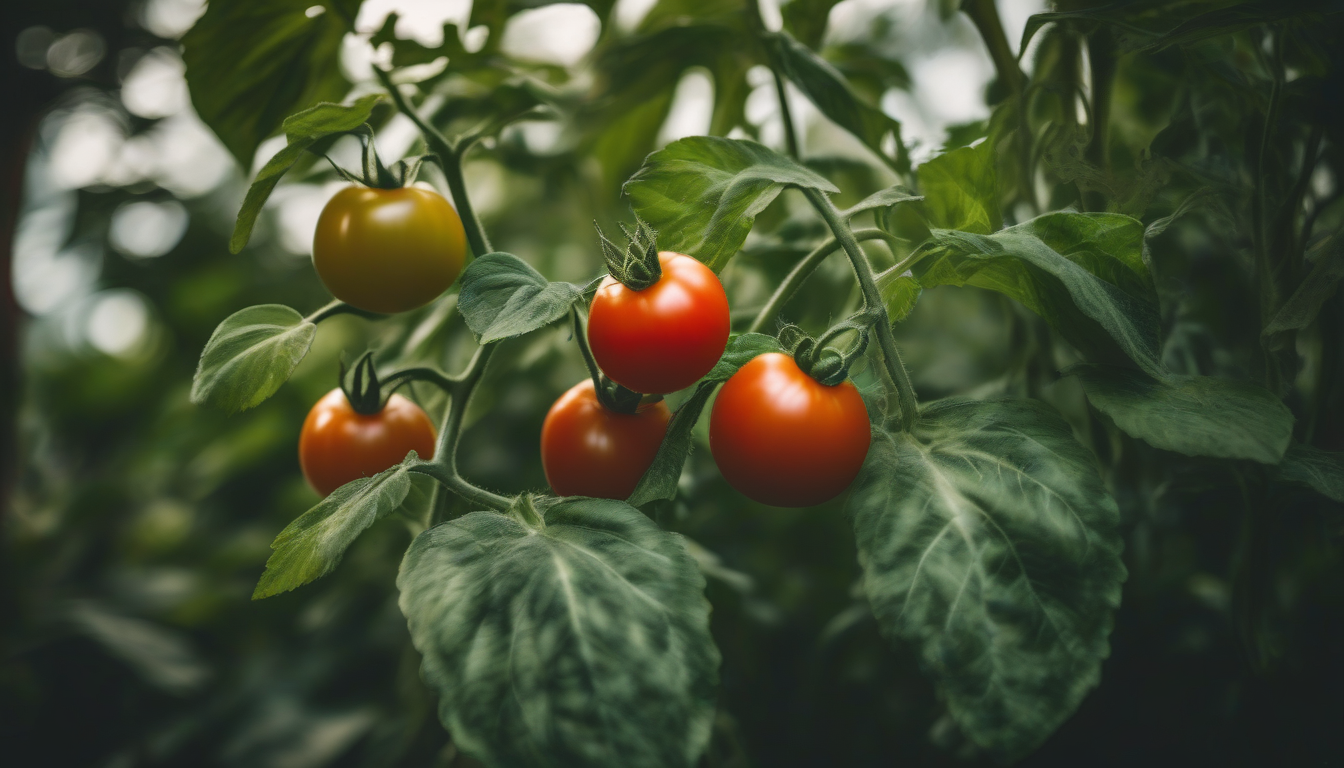
Your tomato plants tower over the garden bed, thick with deep green leaves that shimmer in the December sun. You water them faithfully, feed them regularly, and yet—when you check for fruit, there’s nothing but more leaves. It feels like a cruel joke, doesn’t it? That lush, healthy foliage is actually telling you something has gone seriously wrong.
Across India this winter, home gardeners are searching frantically for answers to the same puzzle: why do tomato plants produce endless leaves but refuse to fruit? The problem isn’t disease or neglect. It’s often a well-meaning mistake that turns your tomato plant into a leafy ornamental instead of a productive crop.
The nitrogen trap: When feeding becomes overfeeding
Here’s what most gardeners don’t realize: nitrogen is a double-edged sword. It’s the nutrient that powers vegetative growth—stems, branches, and those glossy leaves. When your soil or fertilizer is nitrogen-heavy, your tomato plant interprets this as a signal to keep growing bigger, not to reproduce.
Think of it this way: a plant in nutrient-rich conditions believes it has time to grow. Why rush to flower and fruit when resources are abundant? So it keeps pumping out foliage instead.
Common sources of excess nitrogen in Indian gardens include:
- Fresh cow dung or poultry manure applied too generously
- Urea-based fertilizers used without balancing phosphorus and potassium
- Compost that hasn’t fully decomposed (still releasing high nitrogen)
- Frequent applications of nitrogen-rich liquid feeds
The fix is counterintuitive but effective: stop feeding nitrogen entirely for 2–3 weeks. Switch to a bloom-focused fertilizer with higher phosphorus (the middle number in NPK ratios). Look for formulations like 5-10-10 or bone meal, which encourage flowering without promoting more leaf growth.
Light and temperature: The flowering trigger you can’t fake
Tomatoes are remarkably sensitive to their environment. Even in December, when temperatures across most of India are ideal for tomato cultivation, subtle light and temperature imbalances can block flowering.
Tomato plants need at least 6–8 hours of direct sunlight daily to initiate flowering. If your plants are in partial shade—perhaps under a tree or near a wall that blocks afternoon sun—they’ll grow leaves beautifully but won’t commit to fruiting.
Temperature plays an equally critical role. Tomatoes flower best when:
- Daytime temperatures stay between 21–27°C
- Nighttime temperatures don’t drop below 13°C or rise above 21°C
In northern India this time of year, nights can dip lower, especially in Delhi, Punjab, and Haryana. If temperatures fall below 13°C consistently, pollen becomes non-viable. Flowers may form, but they drop off without setting fruit. In southern and coastal regions, the opposite problem can occur: if December days are still too warm (above 32°C), pollen gets damaged and flowers abort.
If you suspect temperature stress, try these adjustments:
- Use shade cloth during the hottest part of the day in warmer zones
- Cover plants with breathable fabric on cold nights in northern regions
- Water in the early morning to moderate soil temperature swings
Pruning mistakes: Removing the wrong growth
Pruning is essential for healthy tomato plants, but cutting off the wrong parts can eliminate your entire fruit potential. Many gardeners enthusiastically trim back their tomato plants to keep them tidy, not realizing they’re removing flowering shoots.
Tomatoes produce fruit on specific structures called trusses or flower clusters. These emerge from the main stem and branches, usually after every few leaves. If you’re aggressively pruning side shoots (suckers) or cutting back terminal growth, you might be removing the very parts that would have flowered.
Here’s the pruning rule that protects your harvest:
- Remove suckers (shoots growing between the main stem and a branch) only on indeterminate varieties
- Never prune the main growing tip unless the plant is over 1.5 meters tall
- Leave at least 2–3 mature leaves above each flower cluster to provide energy
- Stop all pruning once flower clusters appear
Determinate varieties (often called “bush tomatoes”) should barely be pruned at all. They set all their fruit at once and don’t benefit from aggressive trimming.
Pollination failure: The invisible breakdown
Even if your tomato plant flowers beautifully, fruit won’t form without successful pollination. Tomatoes are self-pollinating, meaning each flower contains both male and female parts. But they still need a trigger—usually wind or vibration—to release pollen onto the stigma.
In sheltered urban gardens, balconies, or protected terraces, there may not be enough air movement. December in India often brings still, calm days, especially in the morning when pollination occurs.
You can hand-pollinate your tomatoes in under a minute:
- Wait until mid-morning (around 10–11 AM) when flowers are fully open
- Gently tap or shake the main stem of the plant
- Alternatively, use a small brush or electric toothbrush to vibrate each flower for 2–3 seconds
Do this every 2–3 days while flowers are present. You’ll see fruit begin to swell within a week if pollination succeeds.
The watering paradox: Stress that triggers fruiting
This might sound strange, but mild water stress can actually encourage tomato plants to flower and fruit. When a plant senses that conditions are becoming less favorable, its survival instinct kicks in: it shifts energy from growth to reproduction.
If you’ve been watering daily or keeping the soil constantly moist, your tomato plant is comfortable—and comfortable plants don’t rush to fruit. Try this approach instead:
- Water deeply but less frequently (every 3–4 days, depending on soil type)
- Let the top 5 cm of soil dry out between waterings
- Watch for very slight wilting in the afternoon, then water the next morning
This controlled stress signals the plant to start flowering. Just don’t let it wilt severely or for extended periods, which will damage overall health.

What to do right now
If your tomato plants are stuck in leafy limbo this December, here’s your action plan:
- Stop nitrogen fertilizers immediately. Switch to a bloom formula or bone meal.
- Check your light exposure. Move containers if needed, or prune nearby plants that cast shade.
- Hand-pollinate existing flowers every few days.
- Reduce watering frequency slightly to introduce mild stress.
- Protect from temperature extremes with shade cloth or frost covers as needed.
Within 2–3 weeks, you should see flower clusters forming and, shortly after, the first tiny green tomatoes. The key is recognizing that lush leaves aren’t always a sign of success—sometimes they’re a red flag that your plant is too comfortable to fruit.
Your tomato harvest is still within reach this season. Make these adjustments now, and by mid-January, you’ll be picking ripe tomatoes instead of just admiring foliage.