Here’s what nobody tells you about Indian winter gardening: while your neighbor is still buying expensive tomatoes at ₹80/kg in January, you could be harvesting fresh produce from your terrace for practically free. December through February is peak Rabi season—the absolute sweet spot when certain vegetables grow faster, taste sweeter, and require almost no maintenance.
And 2026? It’s the year to finally break the cycle of depending on overpriced market vegetables.
Why December planting is your secret weapon
Most home gardeners make one critical mistake: they assume winter is “too cold” for growing anything. But in India, winter is actually our second monsoon for vegetables. The cool nights and mild days create perfect conditions for leafy greens and root vegetables to develop intense flavors that you’ll never find in summer crops.
The vegetables we’re about to discuss don’t just survive December—they thrive in it. And they’ll keep producing well into March, giving you a solid 4-month harvest window.

The 7 vegetables that will change your 2026 garden game
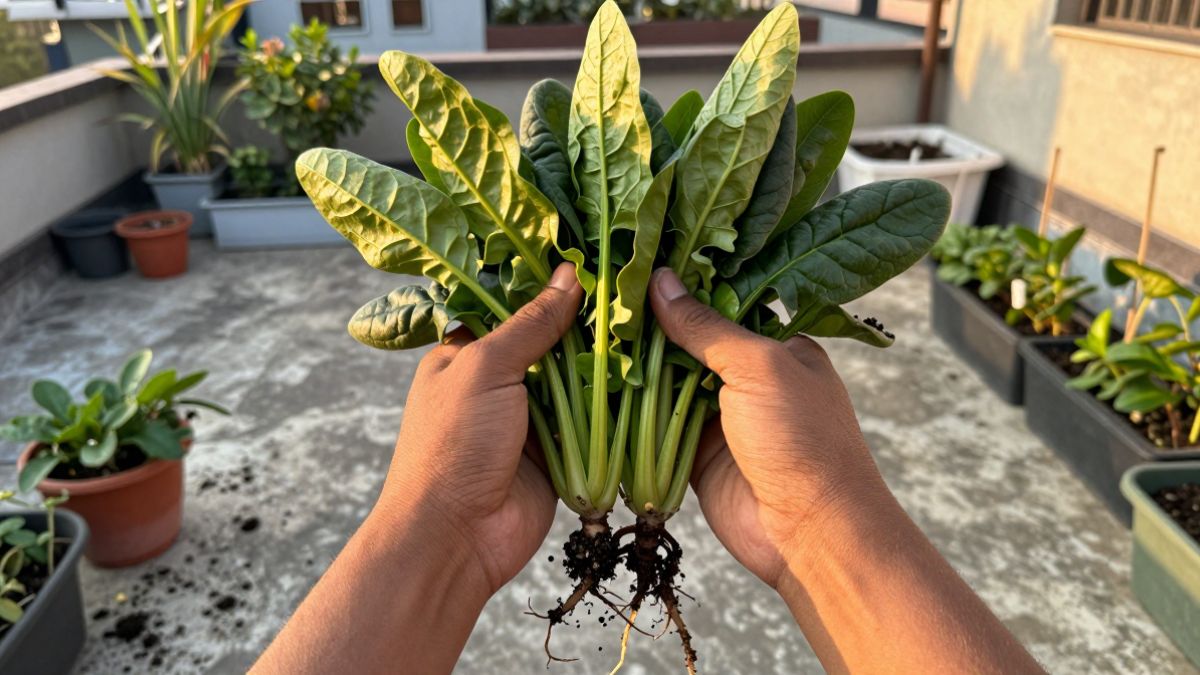
1. Palak (Spinach)
Plant now, harvest in 25 days. Keeps producing leaves for 3 months straight. One ₹10 seed packet = approximately 5kg of fresh spinach by February.
Pro tip: Sow seeds directly in grow bags every 2 weeks for continuous supply.
2. Methi (Fenugreek)
The fastest ROI in home gardening. Ready to cut in just 20 days. Your morning parathas will thank you.
Secret advantage: The same plant regrows 2-3 times after cutting. Zero replanting needed.
3. Dhaniya (Coriander)
December-planted coriander develops thick stems and intense aroma that summer crops can’t match. Perfect for that authentic Indian flavor base.
Money hack: Stop buying those ₹20 coriander bundles. One tray investment = fresh coriander until April.
4. Mooli (Radish)
Grows underground, so it’s perfect for small spaces. Harvest in 30-40 days. Both leaves (for mooli ka saag) and roots are edible—you’re literally doubling your yield.
5. Gajar (Carrots)
Indian winter carrots are naturally sweeter because the cool soil concentrations the sugars. Plant the Nantes variety for containers—they grow short and thick, perfect for terrace gardens.
Timing note: Plant before December 20th for best results in 2026.
6. Matar (Peas)
Climbing varieties can grow vertically, making them ideal for small balconies. Plus, fresh peas in January? That’s the kind of flex your WhatsApp garden group needs to see.
7. Beetroot
Thrives in cool weather, needs almost zero care, and gives you nutrient-dense roots in 60 days. The leaves are edible too—toss them in dal or sabzi.
The December planting advantage for 2026
Here’s the math that matters: If you plant these seven vegetables in the next two weeks, you’ll harvest continuously from January through April. That’s roughly 16 weeks of free vegetables. Average savings? Anywhere between ₹3,000 to ₹5,000 depending on your family size.
But beyond money, there’s something deeply satisfying about walking to your terrace instead of the sabzi mandi. No haggling over prices. No wondering how many pesticides were used. Just fresh, crisp vegetables that taste the way they’re supposed to.

Your December action plan
This week:
- Get your containers ready (grow bags work perfectly)
- Mix 50% garden soil + 30% compost + 20% cocopeat
- Start with methi and palak—they’re foolproof
By December 20th:
- Plant carrots and radish
- Set up vertical support for peas
Before January:
- All seven vegetables should be in soil, already sprouting
The beauty of Rabi season is that nature does most of the work. You’re not fighting the heat or dealing with monsoon pests. You’re working with the season, and that makes all the difference.
What makes this a 2026 strategy (not just December 2024)
These varieties are evergreen knowledge. The same planting window, the same vegetables, the same results—year after year. Whether you’re reading this in 2025, 2026, or 2027, if it’s December in India, this guide works.
Mark your calendar now for December 2026. You’ll plant the same seven vegetables, harvest the same abundant crop, and wonder why you ever paid premium prices for basic vegetables.
Your terrace garden is waiting. The seeds cost less than one week’s sabzi budget. And four months from now, you’ll be the neighbor everyone asks for gardening advice.
Start this weekend. Your 2026 self will thank you.