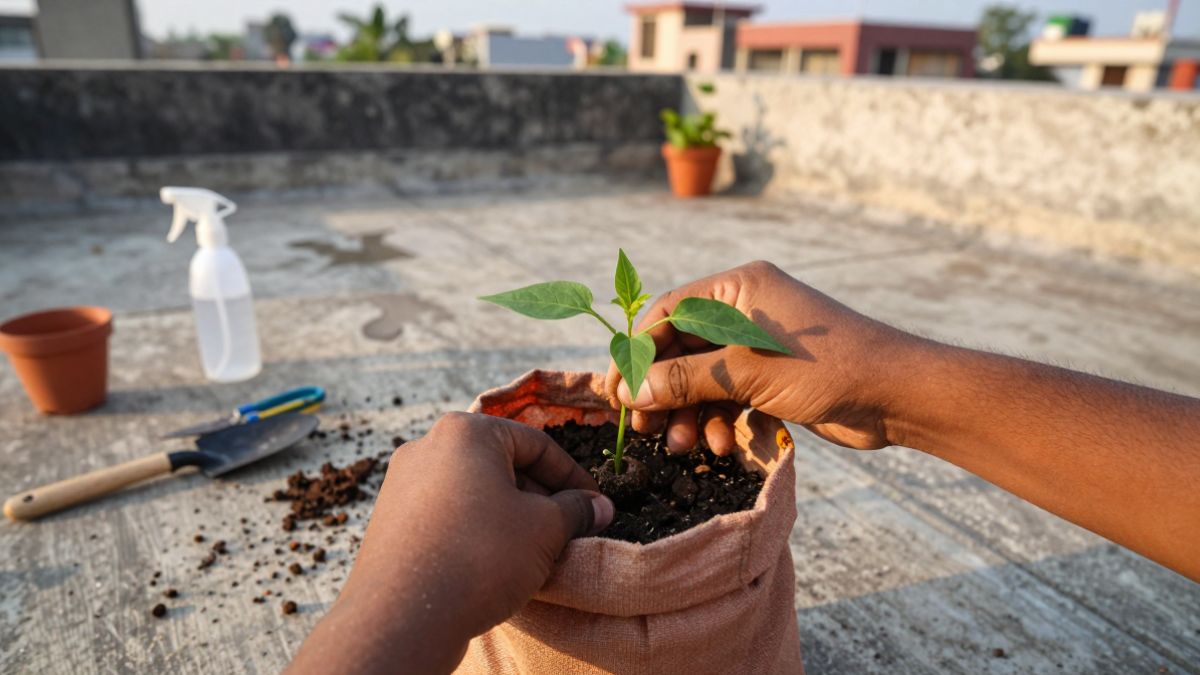
Most first-time rooftop gardeners lose their plants before they even taste their first harvest. It’s not about lack of effort—it’s about ignoring the invisible forces working against you from day one: wind shear, scorching afternoon sun, and waterlogged containers that cook roots alive.
If you’ve been dreaming of turning your terrace into a thriving green space but don’t know where to start, you’re in the right place. We’re walking through the exact setup that survives Indian rooftops, from choosing containers that won’t crack in April heat to watering systems that prevent the dreaded “crispy leaf syndrome” by week two.
Let’s get your rooftop garden right the first time.
The rooftop realities no one warns you about
Rooftops aren’t ground gardens lifted six floors up—they’re hostile microclimates. Here’s what beginners underestimate:
- Wind stress: Even gentle breezes feel like gusts at height. Plants dehydrate faster, stakes snap, and lightweight pots tumble.
- Heat amplification: Concrete surfaces radiate stored heat long after sunset. Soil temperatures can hit 45°C in summer, literally cooking roots.
- Structural load limits: Most residential rooftops in India can safely handle 100–150 kg per square meter. A large ceramic pot with wet soil? Easily 60 kg. Do the math before you fill the space.
Quick fix: Use grow bags (lightweight, breathable) instead of heavy ceramic. Position heavier containers along load-bearing walls or beams, not in the center of the slab.

Container and soil mix that survives summers
The biggest week-one killer? Dense, waterlogged soil that turns into a suffocating swamp after one rainfall.
What works:
- Containers: Fabric grow bags (15–30 liters) or UV-stabilized plastic pots with drainage holes. Avoid black containers—they absorb heat.
- Soil mix recipe: Equal parts cocopeat, vermicompost, and perlite/sand. This drains fast but holds just enough moisture for hot afternoons.
- Pro tip: Add a 2-inch layer of mulch (dried leaves, rice husks) on top. It cuts soil temperature by 5–7°C and slows evaporation.
If your soil dries out completely within 24 hours, you need more cocopeat. If water sits on the surface for minutes, you need more drainage material.
Watering systems that prevent “week one death”
This is where most beginners fail. They water once in the morning, then wonder why plants wilt by 3 PM.
Rooftop reality: Plants lose moisture 3x faster than ground gardens due to wind and heat exposure.
Solutions:
- Drip irrigation (budget ≈ ₹2,000–₹5,000): Automated timers deliver water twice daily without you lifting a finger. Game-changer during May–June.
- Self-watering pots: Built-in reservoirs keep roots hydrated for 3–5 days. Perfect for frequent travelers.
- Manual method: Water early morning (6–7 AM) and late evening (6–7 PM). Avoid midday watering—it evaporates before roots can drink, and droplets on leaves magnify sunlight, causing burns.
Test: Stick your finger 2 inches into the soil. If it’s dry, water deeply until it drains out the bottom. Shallow watering creates weak, surface-level roots.

Best beginner crops for rooftop success
Not all plants tolerate rooftop extremes. Start with these heat-loving, low-maintenance winners:
Vegetables:
- Cherry tomatoes: Compact varieties like ‘Pusa Ruby’ thrive in containers. Harvest in 60–70 days.
- Chillies: Green chillies, bird’s eye—virtually unkillable in Indian summers.
- Spinach (palak): Grows fast in partial shade. Sow fresh seeds every 3 weeks for continuous harvest.
Herbs:
- Coriander (dhania): Prefers cooler months (Oct–Feb) but doable with shade cloth in summers.
- Mint (pudina): Spreads aggressively. Keep it in a separate pot or it’ll invade everything.
- Curry leaves: Perennial shrub. Survives years with minimal care.
Flowers (for aesthetics + pest control):
- Marigolds: Repel aphids and whiteflies. Plus, you can use petals in pooja.
Avoid: Leafy greens like lettuce (bolt in heat), root vegetables like carrots (need deep soil), and water-hungry plants like brinjal (unless you have drip irrigation).
Budget setup checklist: Start under ₹3,000
You don’t need fancy equipment. Here’s what works:
Essential kit (₹2,500–₹3,000):
- 10x fabric grow bags (20L) — ₹800
- 100L cocopeat block + 20kg vermicompost — ₹600
- Perlite or sand (10kg) — ₹200
- Seed packets (tomato, chilli, coriander, mint) — ₹300
- Basic hand tools (trowel, pruner) — ₹400
- Organic fertilizer (vermicompost tea or seaweed extract) — ₹300
Optional upgrades:
- Shade net (50% green) for extreme heat months — ₹800
- Drip irrigation starter kit — ₹2,000
Free resources: Kitchen scraps become compost. Egg shells provide calcium. Used tea leaves enrich soil. Your rooftop waste becomes plant food.

The one thing to remember
Rooftop gardening isn’t about perfection—it’s about resilience. Your first batch of spinach might bolt early. A sudden storm might topple your tomato stakes. That’s part of the process.
But once you crack the code—right containers, smart watering, tough plants—you’ll be harvesting fresh chillies for your dal and mint for your chai while your neighbors are still debating whether to start.
Start small. Start this weekend. Your rooftop is waiting.